Jarosinski & Vaugoin
Silversmith for Empires since 1847
1. Identity & Presence
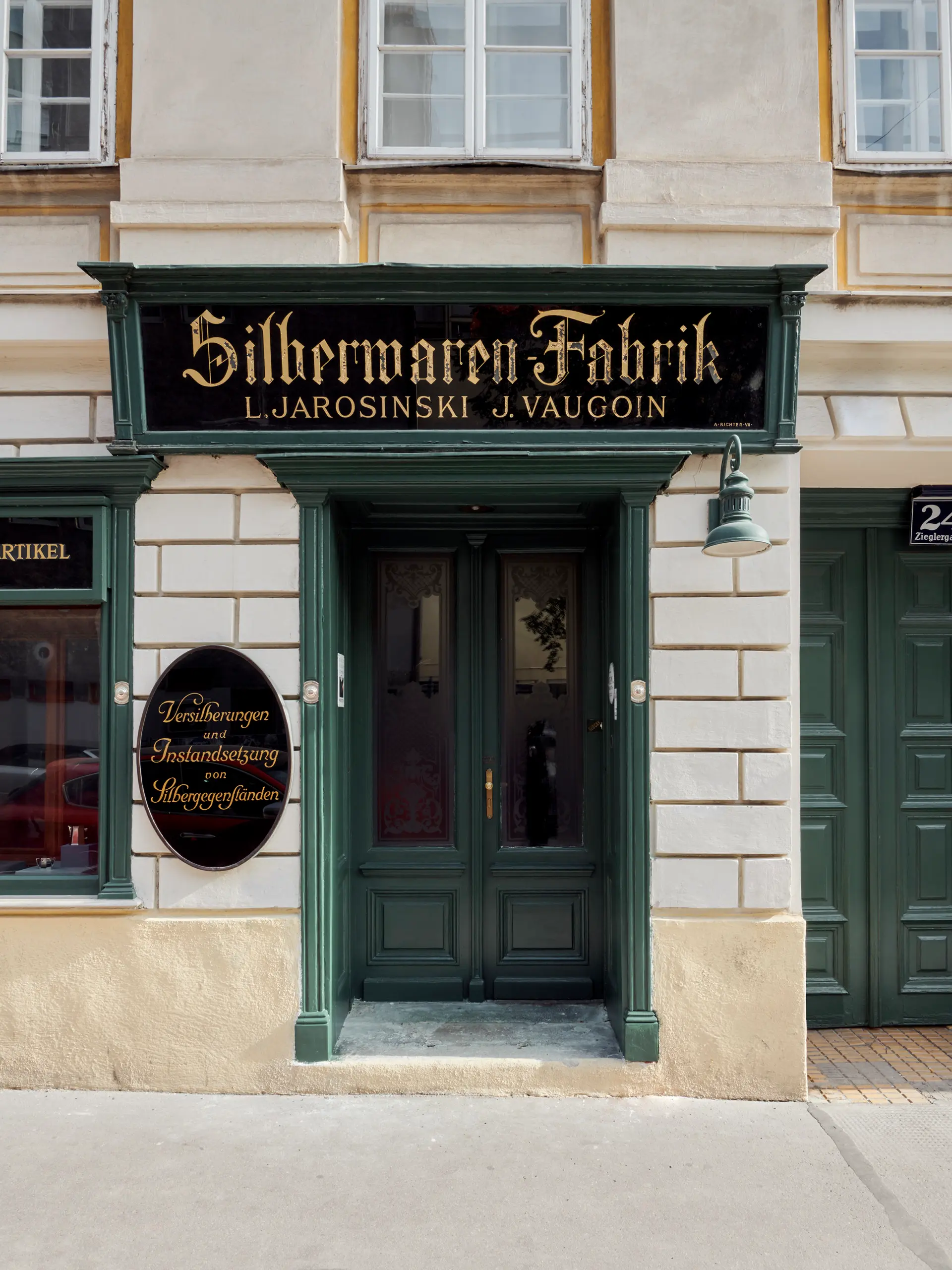
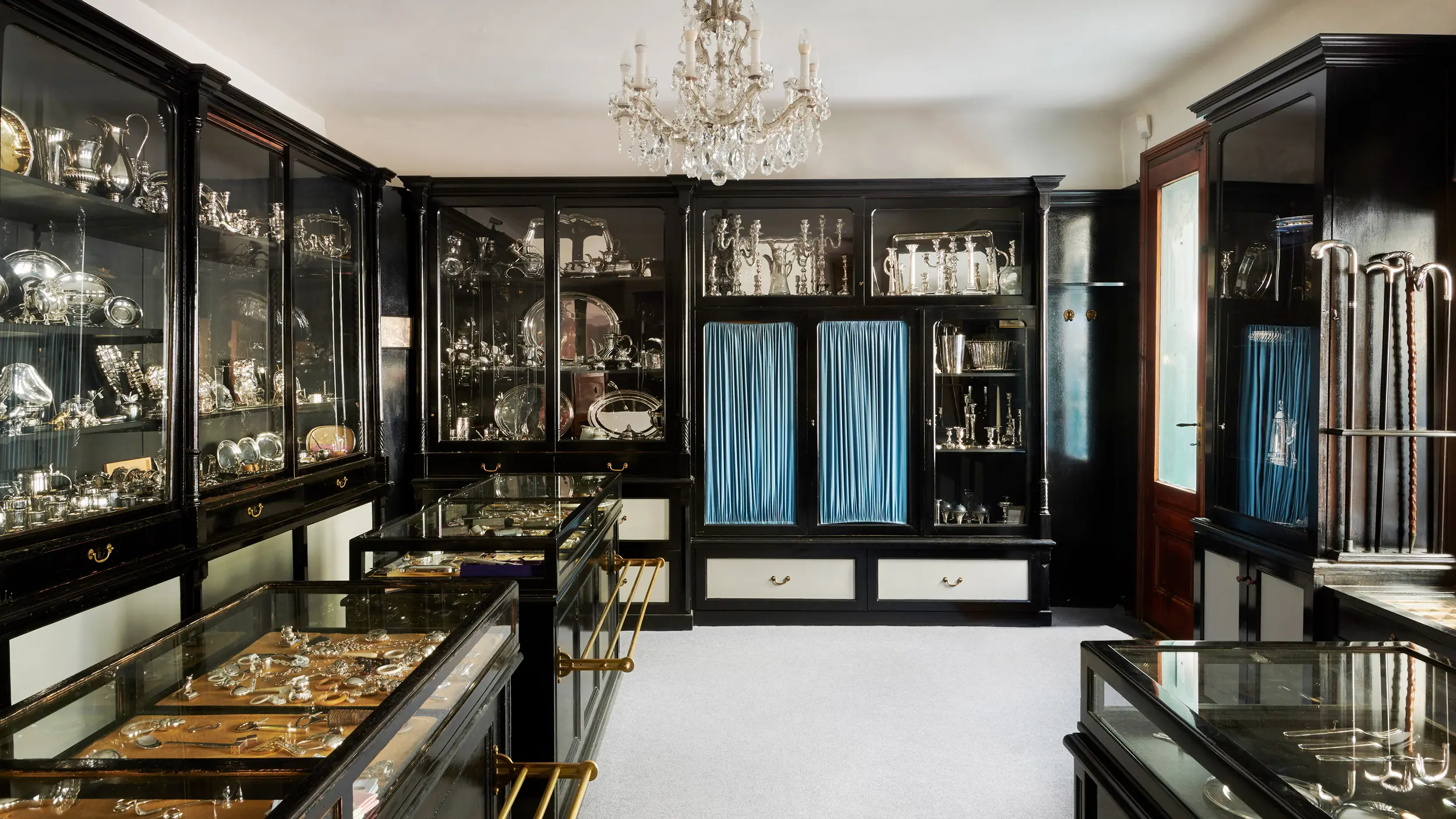
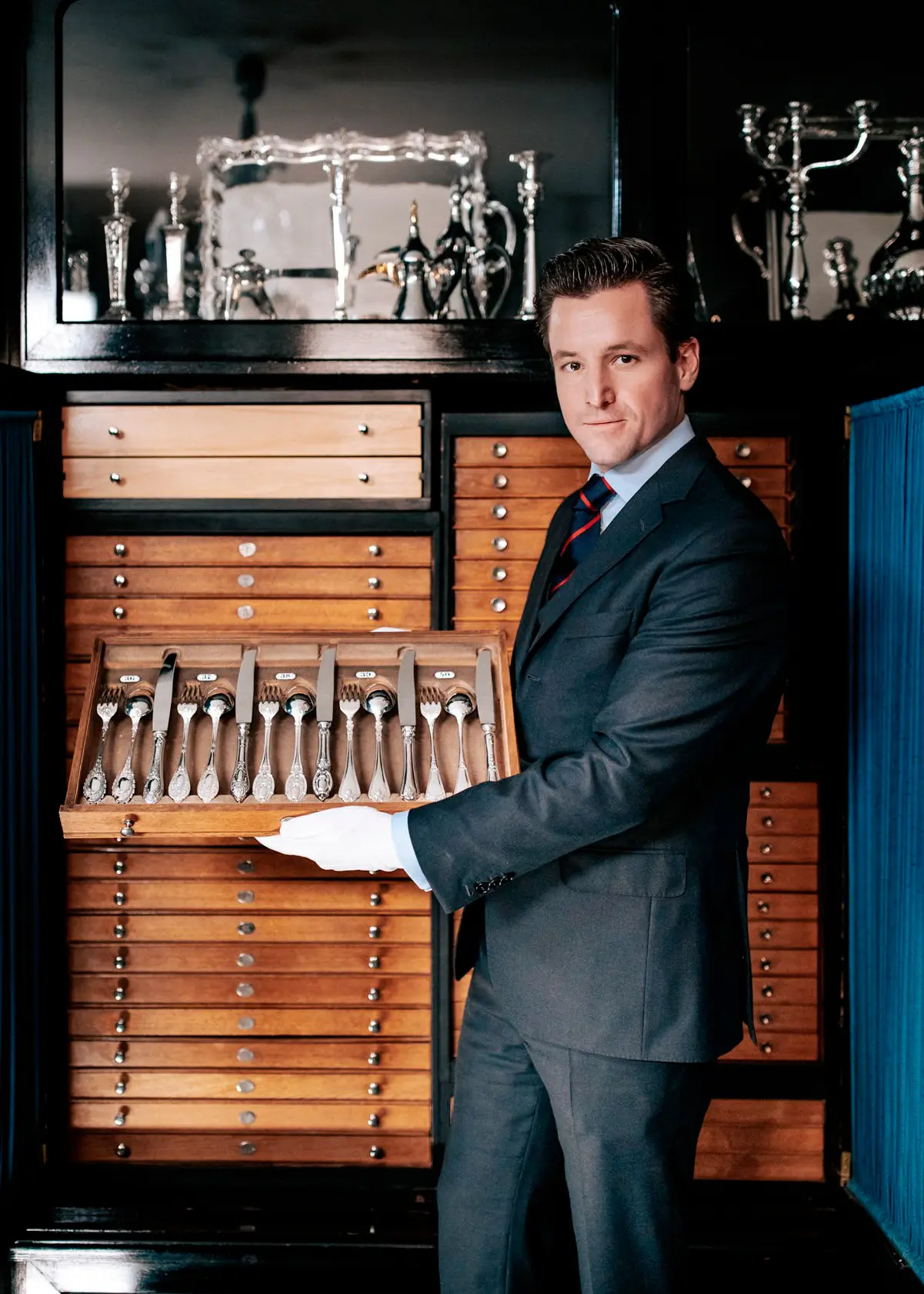
Jarosinski & Vaugoin is Vienna’s oldest surviving silver manufactory and one of the last companies in the world still crafting silverware by hand. Founded in 1847, the family business is based at Zieglergasse 24 in Vienna’s seventh district, where workshop, showroom, and in-house museum form a single, continuous whole. Today the house is led by Jean-Paul Vaugoin in the sixth generation and continues to produce flatware, tableware, bespoke silver objects, jewelry, and accessories in a setting where continuity is not staged but practiced. The company can be reached via www.vaugoin.com, at +43 1 523 33 88, or via silber@vaugoin.com, and their online presence is vaugoin.com.
 Company Jarosinski Vaugoin on Instagram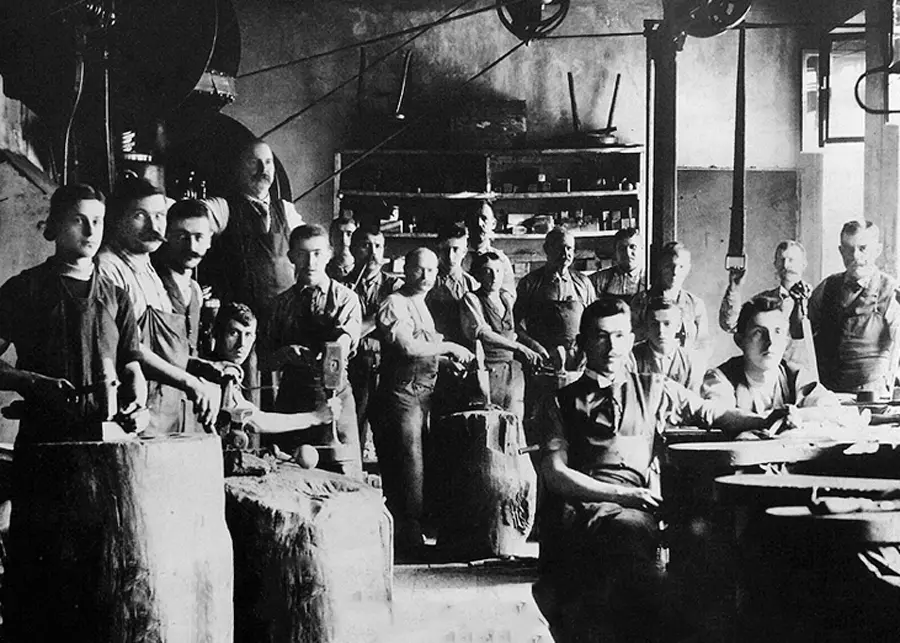
2. The Origin Story & Historical Milestones
The company was founded in 1847 by Carl Vaugoin, who established a workshop specializing in heavy handmade silver cutlery. From the beginning, the house built its reputation on objects that were not only elegant but made for daily use. Its early success was confirmed at the Vienna World’s Fair of 1873, where the firm received several awards for its silverwork. At the beginning of the 20th century, the Vaugoin workshop merged with the Jarosinski business, known for high quality flatware, and the company adopted the dual name it still carries today. In 1908, it moved to Zieglergasse 24, the address that has remained its home ever since.
Over the decades, the house expanded its reach from distinguished private clients to royal households, ministries, and embassies. Today the company has preserved its historical depth while also opening itself to contemporary collaborations and a broader international audience.
3. The Core of the Craft
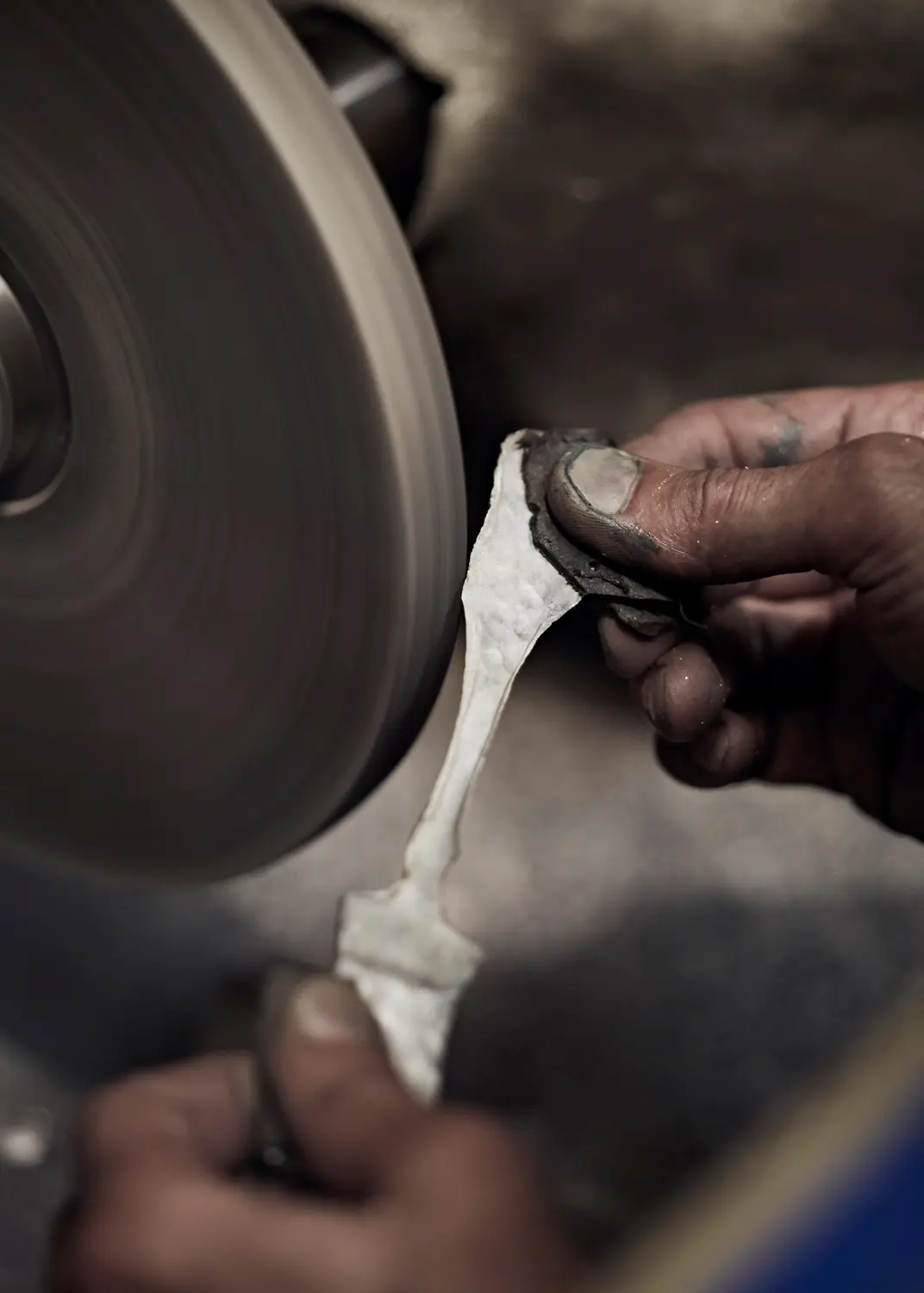
The core of Jarosinski & Vaugoin lies in the disciplined continuity of making. Silver is not treated here as surface luxury, but as material that must be worked, shaped, corrected, and finished until it can endure daily use across generations. Every piece begins as a sheet of silver and passes through a sequence of heating, stamping, filing, bending, polishing, and brushing until form and function reach their final balance. The oldest stamping press still in use dates from 1808. That continuity of tooling is not incidental. It reflects a workshop culture in which technique is transmitted directly, from hand to hand.
The house maintains an active repertoire of around 200 historic cutlery patterns, spanning Baroque, Empire, Biedermeier, Art Nouveau, Art Deco, as well as Wiener Werkstätte and contemporary designs. This breadth is possible because historical forms have never been discarded. What was made in one century remains producible in the next.
That continuity is sustained not only by tools and patterns, but by transmission. Jarosinski & Vaugoin is the last silversmith workshop in Austria still offering formal apprenticeships, a distinction that carries particular weight in a craft whose practitioners are dwindling. The knowledge being passed on is exacting and structural: how to produce a hand forged service that remains consistent in proportion, weight, and finish from piece to piece.
4. Enduring Legacy & Resilience
The measure of the workshop’s endurance is not its age alone, but the quality of its commissions. In 1969, Jarosinski & Vaugoin created a silver replica of the 16th-century Saliera by Benvenuto Cellini for the state visit of Queen Elizabeth II to Vienna (the original, in gold, is held at the Kunsthistorisches Museum). This commission belongs to a longer line of work for royal households, institutions, and diplomatic contexts that have trusted the house not merely with objects, but with representation.
That breadth remains clearly visible in the workshop’s present-day practice. Special commissions include the reproduction of missing elements from (historic) cutlery sets and silver services for formal and wedding tables, as well as the restoration of antique flatware and ecclesiastical silver. Yet the house’s work extends far beyond cutlery alone and encompasses a wider world of silver accessories, from baptismal cups and the much-loved salt crab to key rings, hourglasses, clothes brushes, and cleaning and care products. Repairs also remain an important part of daily practice, from soldering knife blades and re-silvering to galvanic cleaning. The result is a workshop that has endured not by resisting change, but by understanding, across generations, what must remain exact.
5. Vision for the Future
Jean-Paul Vaugoin is clear about what the future of this craft requires: skilled hands, the willingness to train them, and the confidence to insist on permanence. The workshop’s commitment to apprenticeship is therefore not a nostalgic gesture, but a practical answer to the question of continuation. Collaborations with contemporary designers extend the vocabulary of the house without displacing the tradition that gives those collaborations their weight.
What Jarosinski & Vaugoin represents, finally, is a form of cultural endurance that operates quietly and without spectacle. It does not need to claim relevance loudly, because its relevance is already embedded in the logic of its work. In a time of increasing technological substitution, Jean-Paul Vaugoin’s position is almost defiantly simple: solid craftsmanship is what lasts. In that sense, Jarosinski & Vaugoin stands not only for Viennese silver, but for a larger idea of continuity itself.