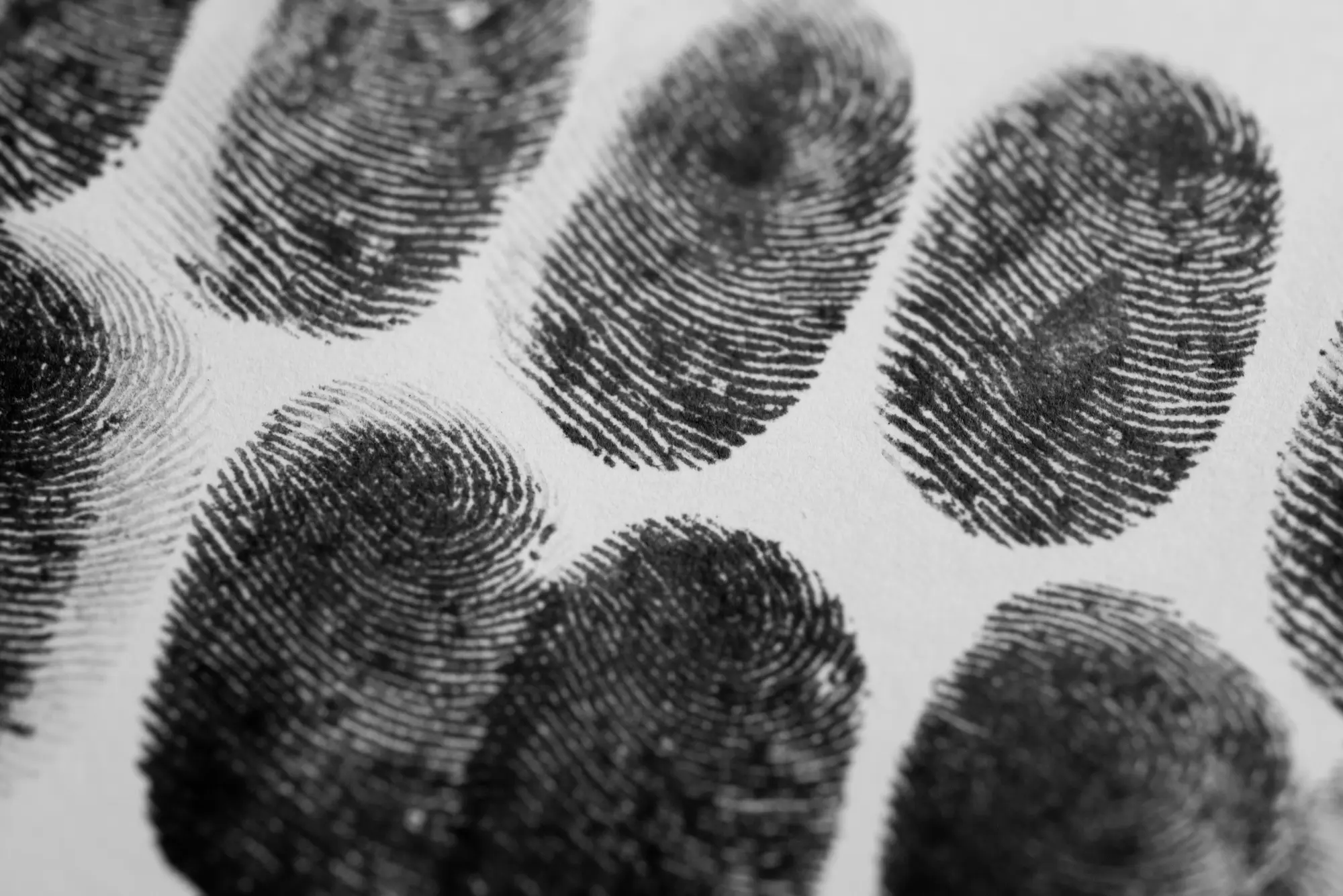
Every human being alive carries a unique pattern on the skin of their fingertips, a arrangement of ridges and whorls so specific that no two people in recorded history have been found to share it, including identical twins. This is not a recent discovery: the uniqueness of fingerprints was documented in seventeenth century Europe and put to practical use in late nineteenth century forensic science, first in colonial India and then in Britain, eventually becoming the foundation of criminal identification systems worldwide.
What is remarkable about this fact is not the forensic application but what it implies about skin itself: that the surface of the body is not generic but individual, that it carries a signature so precise it can place a specific person at a specific location beyond reasonable doubt. Every other organ is interchangeable in ways that make transplantation possible. Skin, at the level of the fingertip, is the one part of the body that belongs to nobody else. The surface that seems most exposed and most public turns out to be the most irreducibly personal thing a person carries.