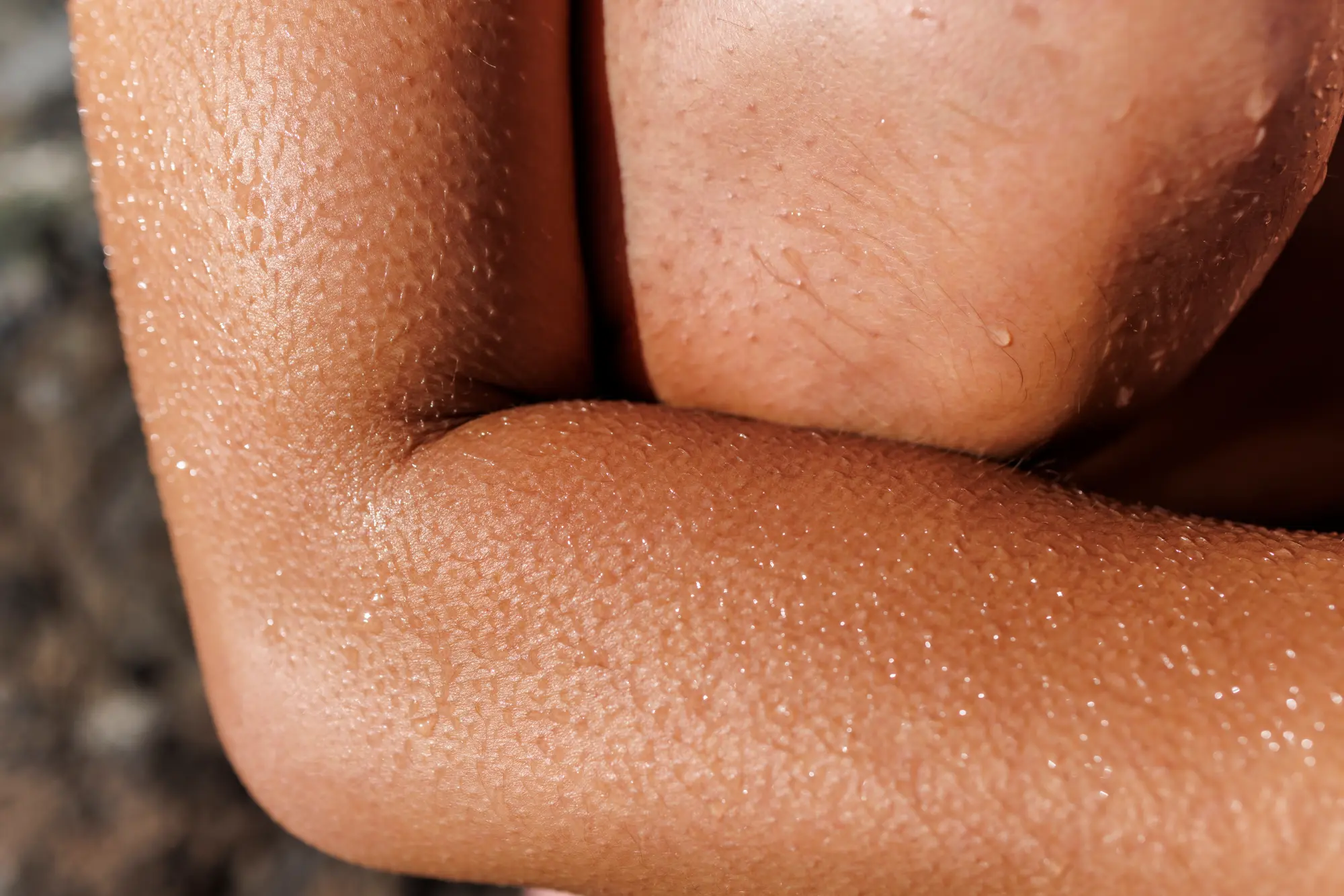
Goosebumps are a mistake. Not a malfunction exactly, but a vestigial reflex inherited from ancestors who had enough body hair for it to matter: when cold or frightened, the arrector pili muscles contract, pulling the hair follicles upright, which in a furry animal raises the coat and creates an insulating layer of trapped air, or makes the creature appear larger to a predator. In a hairless human body, the same muscles contract, the same follicles rise, and the result is a brief stippling of the skin surface that does nothing useful whatsoever. The cold is not addressed. The predator is not deterred. The goosebump is evolution's equivalent of a pocket in a piece of clothing that has been sewn shut: the form survives long after the function has gone.
And yet the reflex fires not only in response to cold and fear but to music, to beauty, to a particular quality of light on water, to the closing bars of a piece that moves you before you have consciously registered why. Skin, in other words, responds to the sublime with the same mechanism it once used to survive the cold. That is either a profound accident or the most interesting thing about the human body. Possibly both.