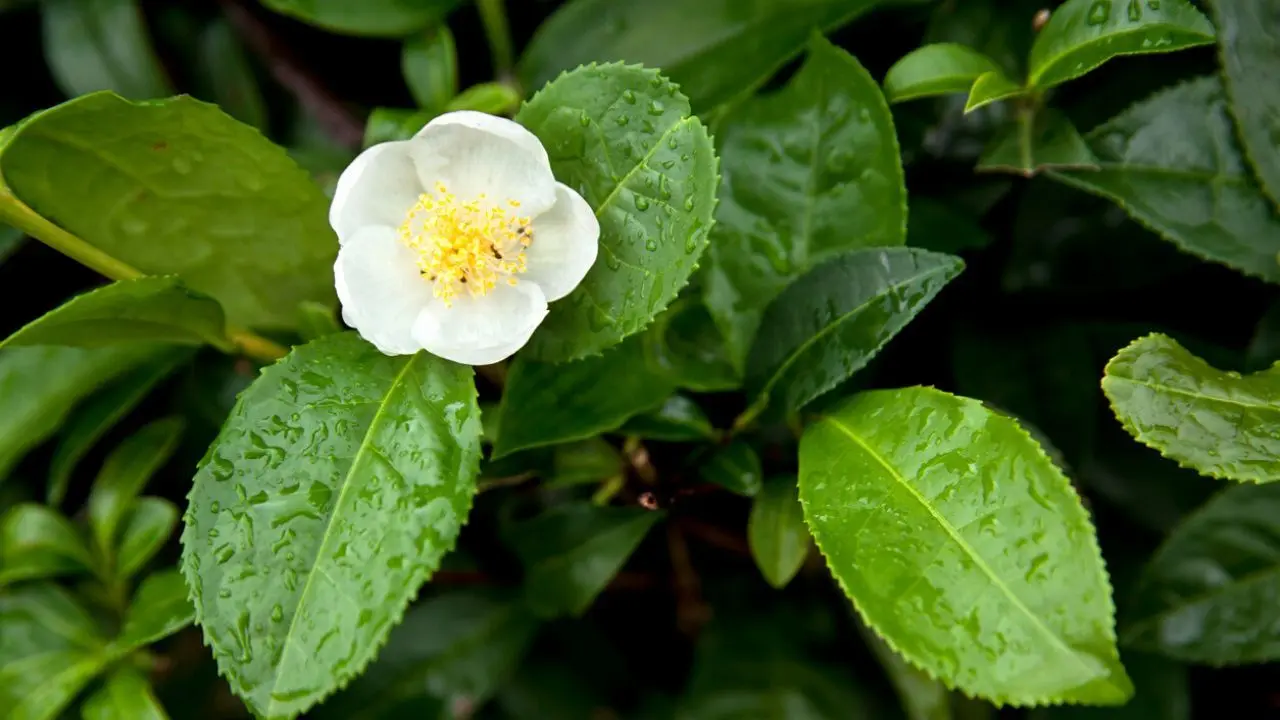
Camellia sinensis is an unassuming evergreen shrub native to the borderlands between southwestern China, northern Myanmar and northeastern India. It produces small white flowers and, if left untended, can grow into a tree several metres tall. Most of the time it is kept low and bushy, its youngest leaves harvested by hand at regular intervals throughout the growing season. It is the source of every tea in the world: green, black, white, oolong, pu-erh, yellow. The differences between them are not botanical. They are decisions made after picking.
Oxidation is the central variable. When a tea leaf is damaged or bruised, enzymes begin reacting with oxygen and the leaf darkens, in the same way a cut apple browns. Green tea is heated quickly after picking to stop this process almost entirely, preserving the leaf’s original character. Black tea is allowed to oxidise fully, producing the deeper, more robust flavour familiar from a breakfast cup. Oolong sits somewhere between the two, partially oxidised to a degree that the maker controls. White tea, made from the youngest buds, is simply dried, the least intervention of all. Each category is the same leaf, handled differently.
What terroir adds to this is the character that no processing decision can manufacture: the altitude at which the plant grew, the soil, the rainfall, the mist that rolls in at a particular elevation on a particular hillside. A Darjeeling first flush, picked at high altitude in the foothills of the Himalayas in early spring, carries a delicacy and a muscatel note that no lowland tea can replicate regardless of how carefully it is processed. A Yunnan pu-erh, aged for years in humid storage, develops a depth that is closer to fermentation than to anything else in the tea family. Both began as Camellia sinensis. What the plant became depended entirely on where it grew and what happened to it next.