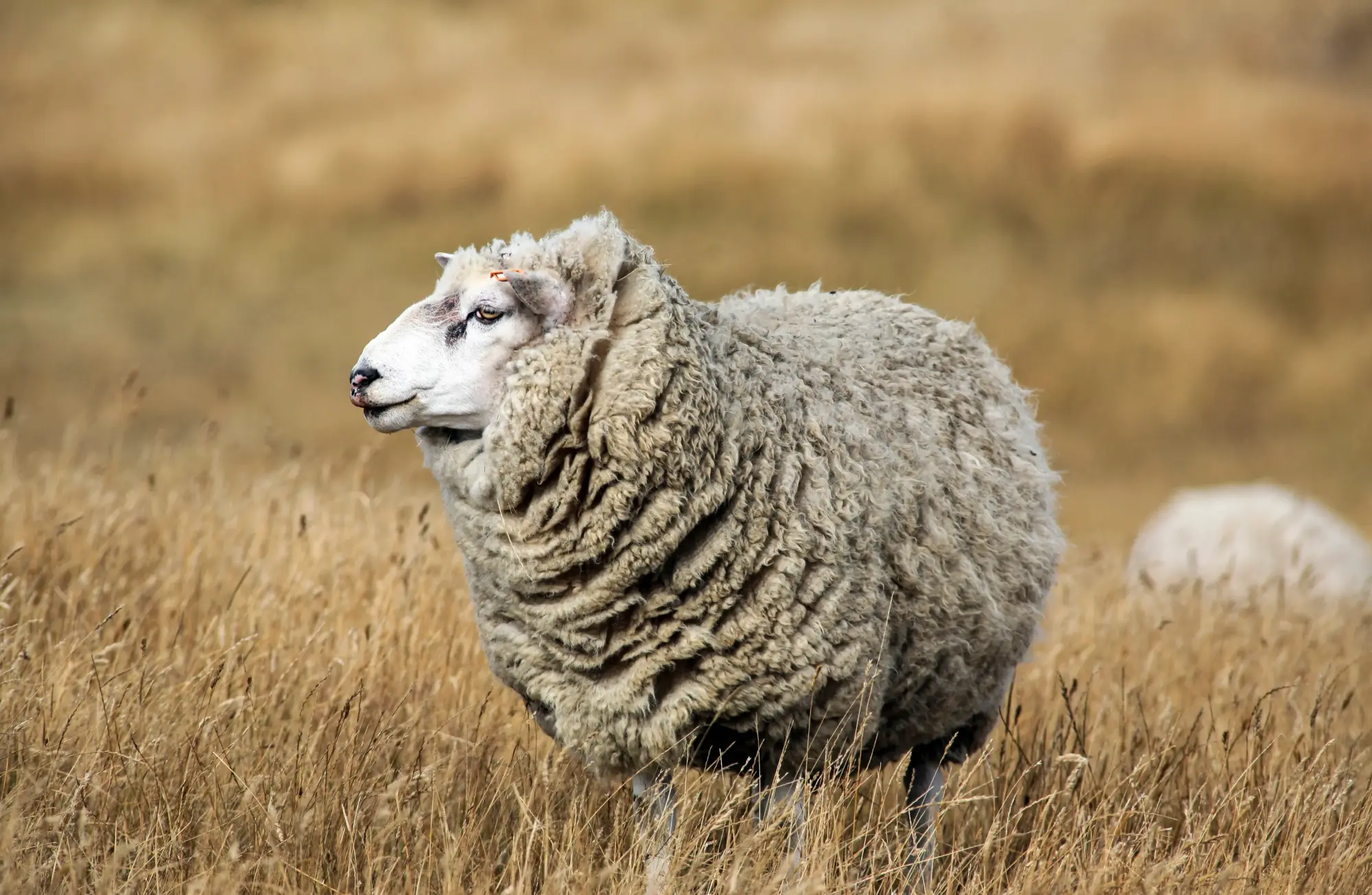
A dark city suit and a woolly sheep seem to belong to different worlds. Yet the distance between them is smaller than it looks. Harris Tweed and a sleek worsted suit can begin with the same fibre. What changes is the treatment: for classic suiting, longer wool fibres are combed into alignment before spinning, producing a cloth that is smooth, compact and precise, with little of the softness usually associated with something called wool.
That refinement does not remove the qualities that make wool so useful to a tailor. Its natural crimp gives the fibre elasticity and recovery, allowing cloth to move with the body and regain its shape after wear. Steam and pressure can persuade it to shrink here and stretch there, helping a tailor turn flat cloth into the curve of a shoulder, waist or trouser leg. Different weights and weaves can carry the same material from winter flannel to lightweight summer suiting.
The suit is often described as armour, yet the fibre beneath its structure succeeds through flexibility. Wool gives way, responds and recovers. What looks controlled from the outside begins with a material whose great advantage is its willingness to move.