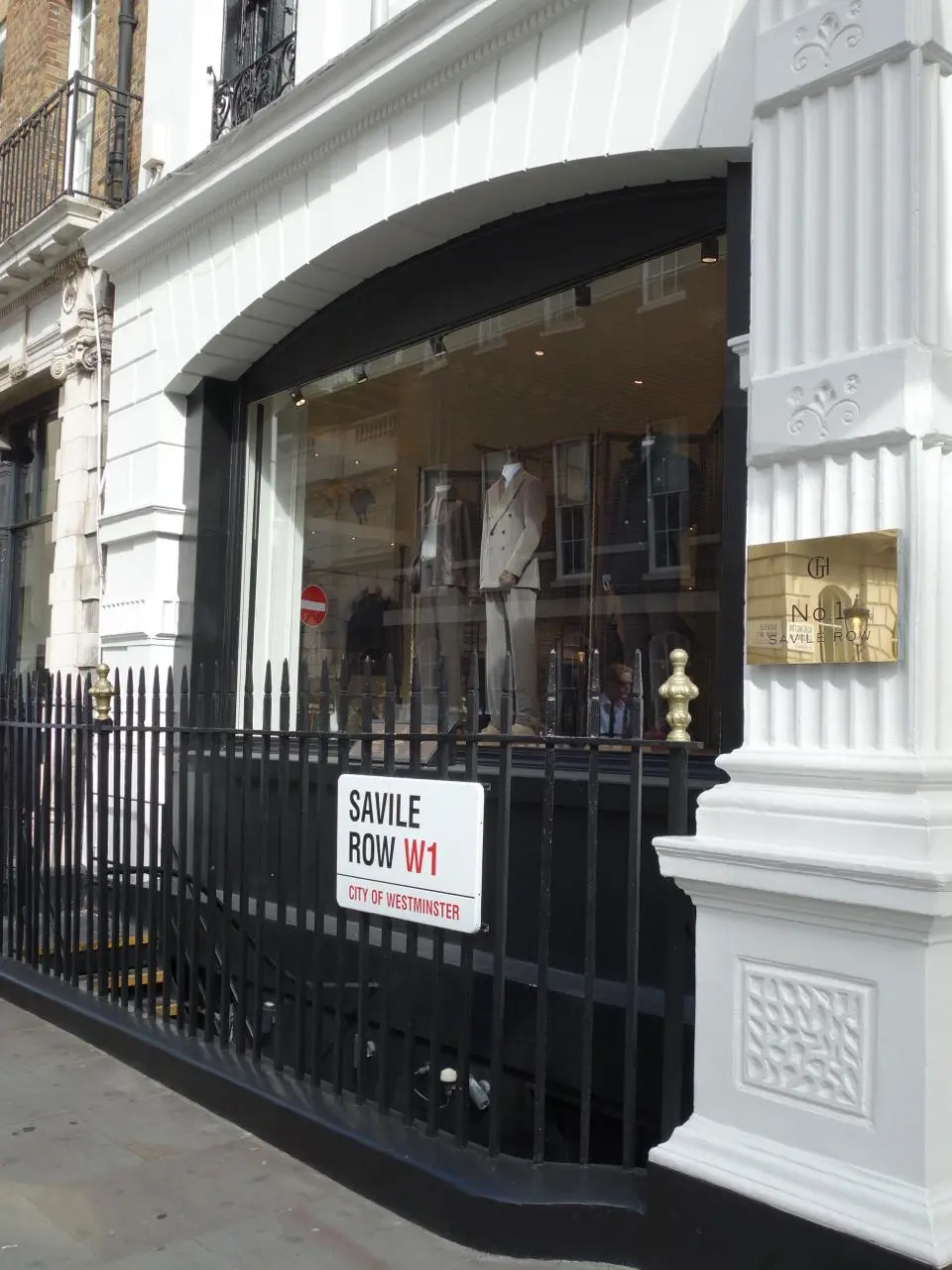
In 1806, there was not a single tailor on Savile Row. The trade was already established nearby, in streets such as Cork Street, Clifford Street and Conduit Street, drawn to Mayfair by the aristocratic clientele who lived there. Savile Row itself was still largely residential. The tailors came because their customers were close.
The decisive move came in 1846, when Henry Poole turned the rear of his family’s premises in Old Burlington Street into an entrance directly onto Savile Row. His success brought royal and international clients, while other tailoring houses increasingly gathered around the same address. The mechanism was self reinforcing: clients came because the tailors were there, and tailors wanted to be there because the clients came.
Eventually, Savile Row ceased to function merely as a street name. Like Fleet Street for newspapers, it became shorthand for an entire profession and its standards. One disputed theory even traces the Japanese word for a business suit, sebiro, back to Savile Row. Whether or not the etymology is correct, the association itself says something about the reach of the name. Its achievement was to concentrate craft and reputation in one place for long enough that geography became language.