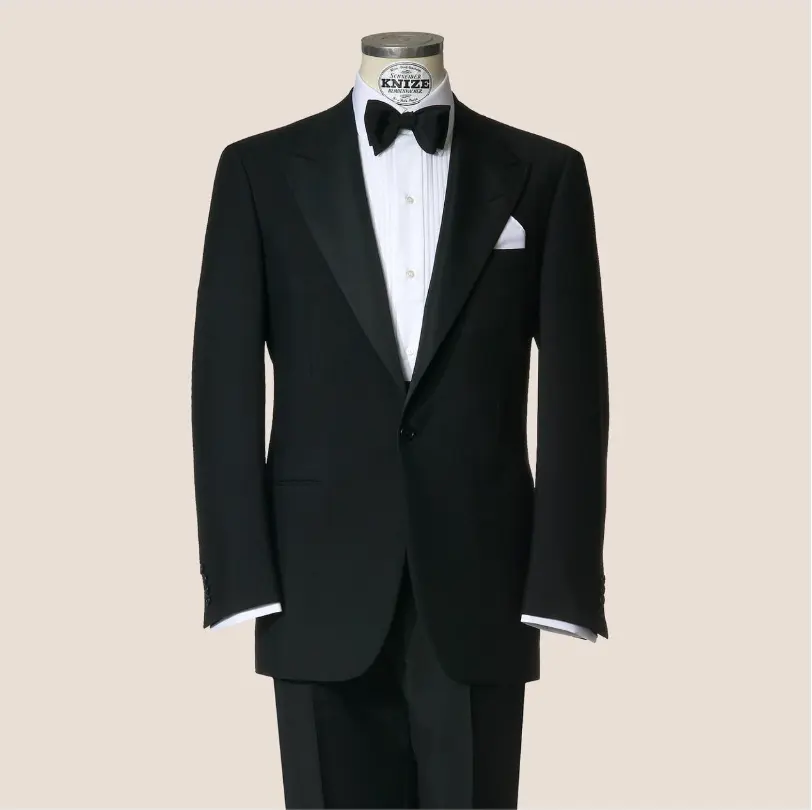
The suit has survived because it can change without losing its identity. Lapels widen and narrow, shoulders soften, trousers rise and fall, fabrics become lighter, yet the basic proposition remains recognisable: jacket and trousers cut from the same cloth, shaped to give the body a deliberate outline.
Its adaptability is part of the reason. The suit accompanies a teenager to a first ball, a graduate to an interview, and a groom to his wedding. Marlene Dietrich made masculine tailoring an act of defiance; later, the suit became part of the working wardrobe of women entering professions whose visual codes had been established by men. It appears at promotions, funerals and formal occasions, sometimes with complete familiarity and sometimes at the threshold of a new social role.
A well made suit can also be altered, repaired and worn long enough to become associated with the person rather than the occasion. In bespoke tailoring, it begins not with a standard size but with an individual body. The suit became a classic not by resisting change, but by absorbing it.