For several centuries in European court culture, the ideal female face was white. Not fair, not pale, but white, a surface so uniform and opaque that it read as a kind of mask even on a living person. The preparation used to achieve it was ceruse, a compound of white lead mixed with vinegar, applied thickly and regularly by women who were aware of its effects and continued anyway. It caused hair loss, skin erosion, and, over time, the systematic poisoning of the nervous system. Kitty Fisher, one of the most celebrated beauties of eighteenth-century London and a favourite subject of leading portraitist Sir Joshua Reynolds, is among those thought to have died young partly as a consequence of the preparations she used to maintain the appearance that made her famous. The irony is precise: the substance applied to preserve the surface was destroying the person beneath it.
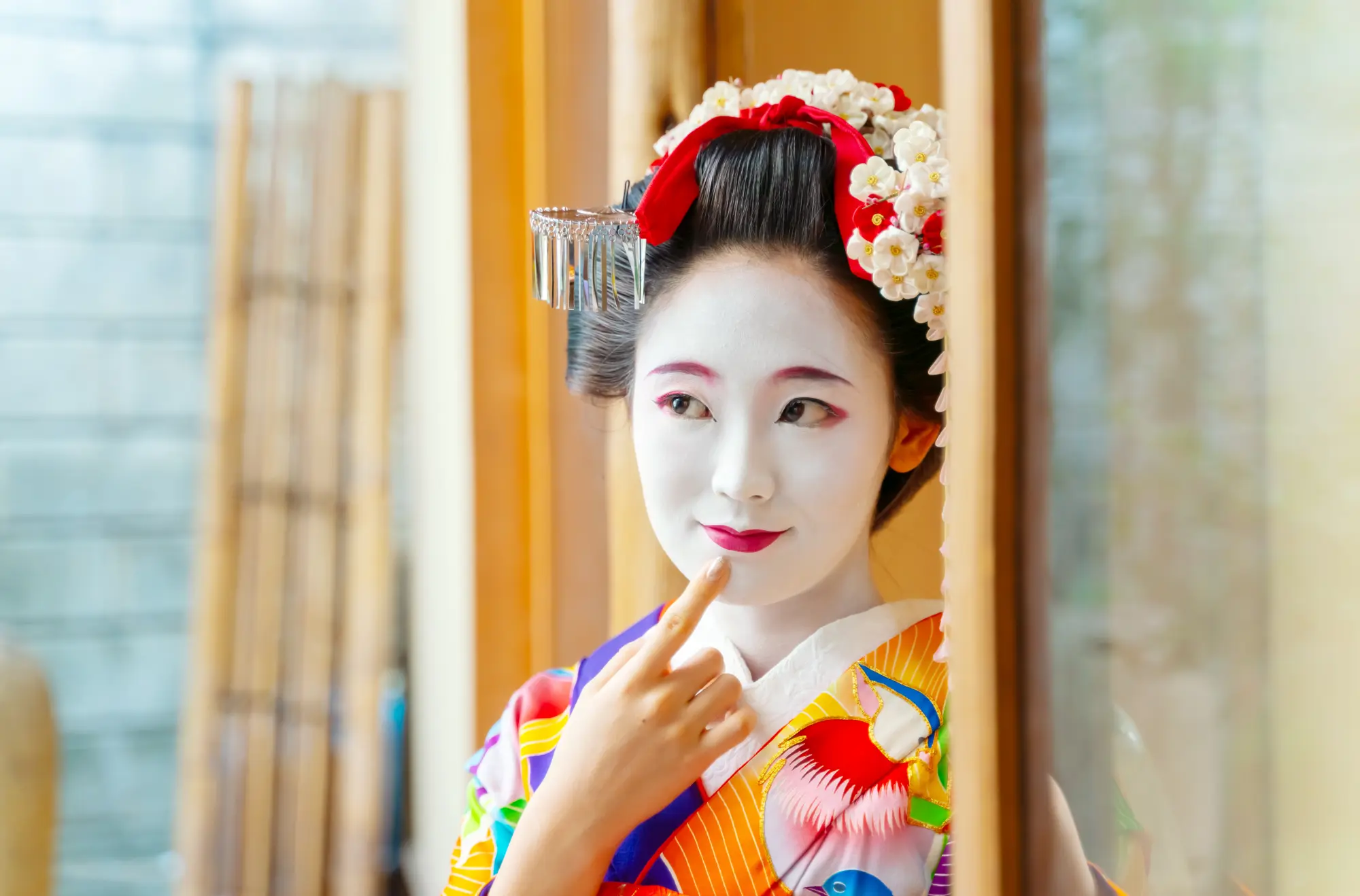
Japanese Geisha culture arrived at the same white face through an entirely different route. Rice powder rather than lead, a theatrical convention rather than a beauty ideal, the white face as a signal that the woman wearing it had crossed into a performed role distinct from her private self. And the aesthetic was already centuries old before any European contact: the white face ideal in Japan appears in Heian court culture as early as the tenth century, developed entirely independently of anything happening in the courts of Europe.
The convergence was not borrowed. It was arrived at separately, which raises a question the preparations themselves never answered: what is it about a white face that two such different cultures decided, independently and centuries apart, that it was worth having at almost any cost?