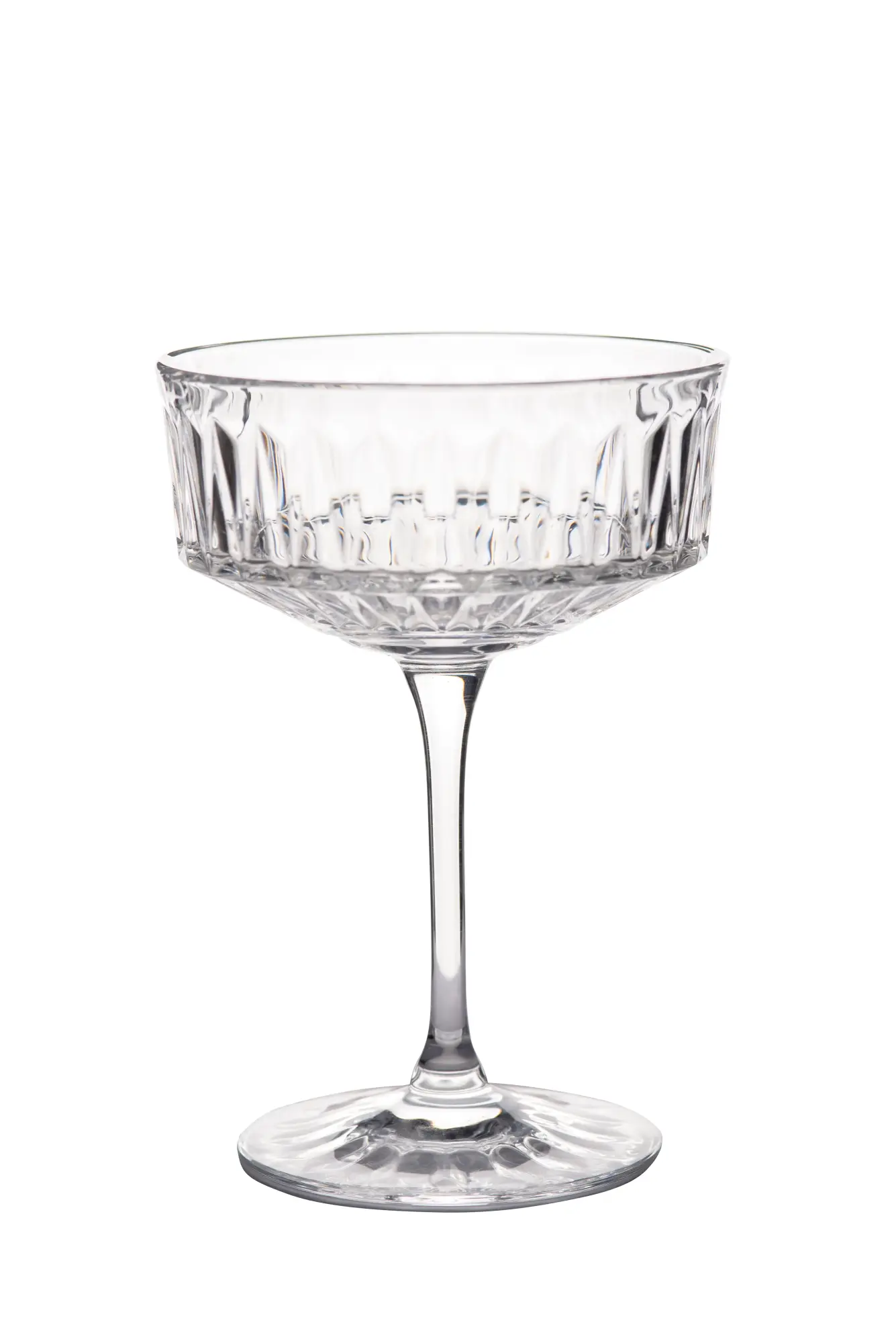
The coupe glass is routinely described as a product of the 1920s, but its origins are considerably older, traceable to England in the late 1600s and only arriving at its iconic status two and a half centuries later, reshaped by Art Deco design and pressed into service during Prohibition as a more stable alternative to the martini glass.
Its association with sparkling wine has always been partial at best. The same wide shallow bowl has spent an equal portion of its history holding sorbet, gazpacho, and crab cocktail, a versatility that explains why the shape survived long after the flute displaced it as the standard vessel for Champagne.
The coupe has held celebration and cold soup with equal composure for three centuries, which is justification enough. It has also, along the way, acquired a myth: that its curve was modelled on the breast of Marie Antoinette, a story almost certainly invented after her execution, when she had become a romantic figure rather than a political one, and never reliably verified since. Not every glass gets a legend. The coupe wears it lightly.