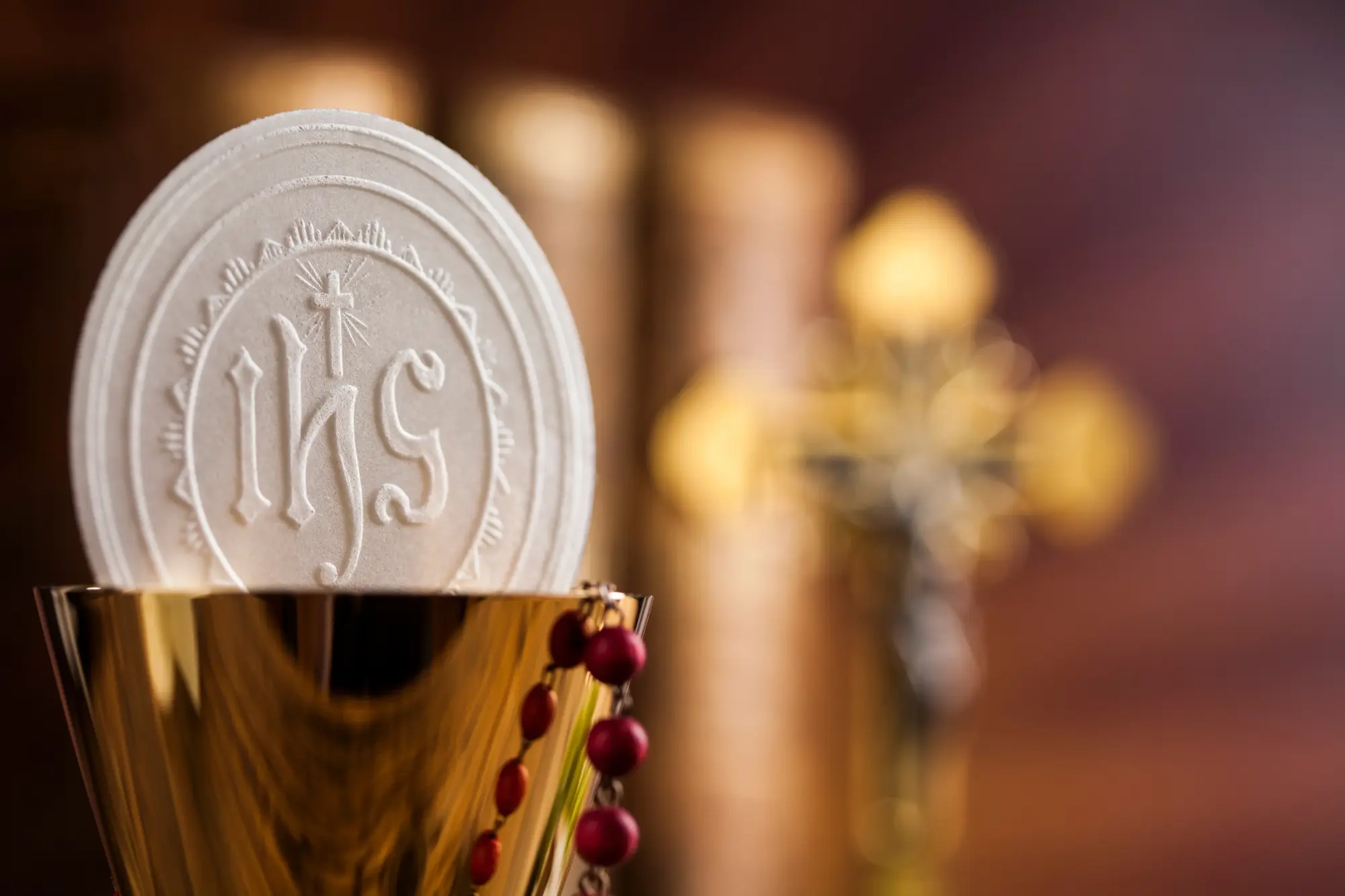
Long before the wafer became a sweet, a snack, or a patterned crisp, it had a solemn place in the Latin Church as the Eucharistic host. In the Middle Ages, the host gradually took the form we now associate with it: thin, round, unleavened, and made from wheaten flour and water, prepared under controlled conditions for Mass. Its plainness was not a lack of meaning but part of its theology, since the form itself was meant to serve the sacrament with clarity and reverence.
Over time, host-making became a specialized craft, and craftsmen using heated irons produced the thin wafers for liturgical use; centuries later, the same basic technique also found its way into secular wafers and related crisp cakes.