Knize
Men's Finest Fashion Since 1858
1. Identity & Presence
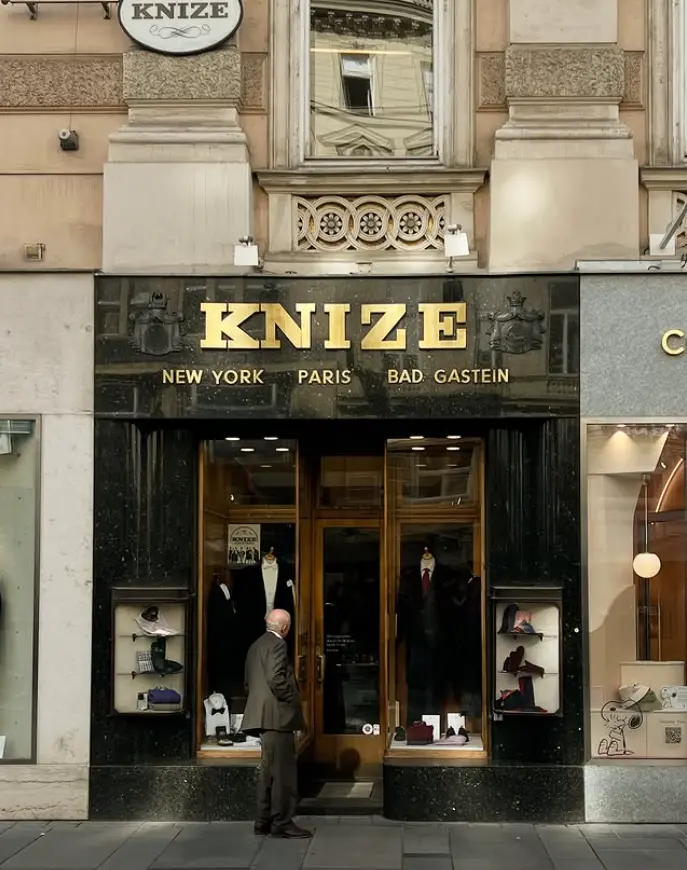
Knize is one of Vienna’s most distinctive houses for men’s fashion. Founded in 1858, the company presents itself today as “Wiens erste Adresse für Herrenmode”: a place for Maßsalon and prêt-à-porter, for business, event, and leisure clothing, and for the wider world of the gentleman’s wardrobe.
2. The Origin Story & Key Figures
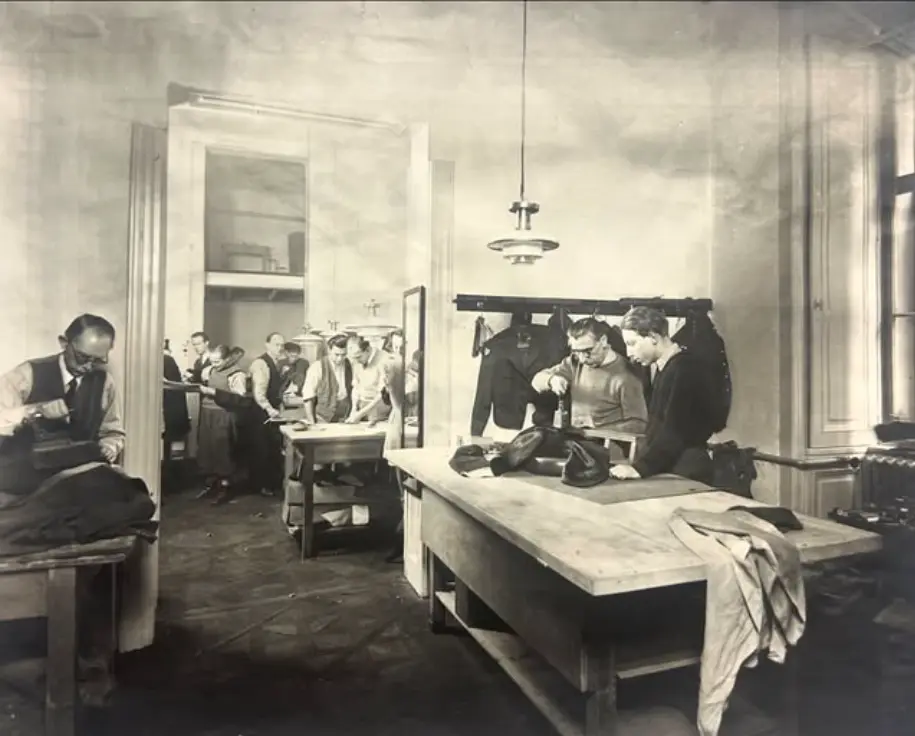
The history of Knize began in 1858, when the company was founded as a tailoring workshop in Vienna’s first district. Its early clientele included the Emperor and Archdukes of the House of Habsburg, and in 1888 Knize received the title of k.k. Hof-Schneider. Josef Knize died in the same year; Albert Wolff became sole owner, and in 1902 Josef Knize’s widow Gisela took over the business with her four children. In 1904, the company was renamed KNIZE & Comp.In the Belle Époque, the house developed a distinctly modern understanding of men’s fashion. The present business premises at Graben 13 were designed by Adolf Loos and have remained almost unchanged to this day. Loos also designed Knize branches in Karlsbad, Berlin, and Paris. In 1922, the Wolff family brought in the graphic artist Ernst Dryden as designer; Knize describes this period as the moment in which the house became known as the world’s first modern men’s fashion label. This linked tailoring, architecture, graphic identity, restraint, and metropolitan elegance into a remarkably coherent vision of dress.
The twentieth century brought both international reach and rupture. In 1938, the Wolff family had to leave Austria because of their Jewish origin, first emigrating to Paris and later to New York, where they opened a shop on 56th Street in 1941. After the Second World War, Knize suffered heavy losses: the Berlin shop was destroyed, and the Iron Curtain cut off the branches in Karlsbad and Prague. Later, the Paris and New York branches also closed.
3. The Core of the Craft
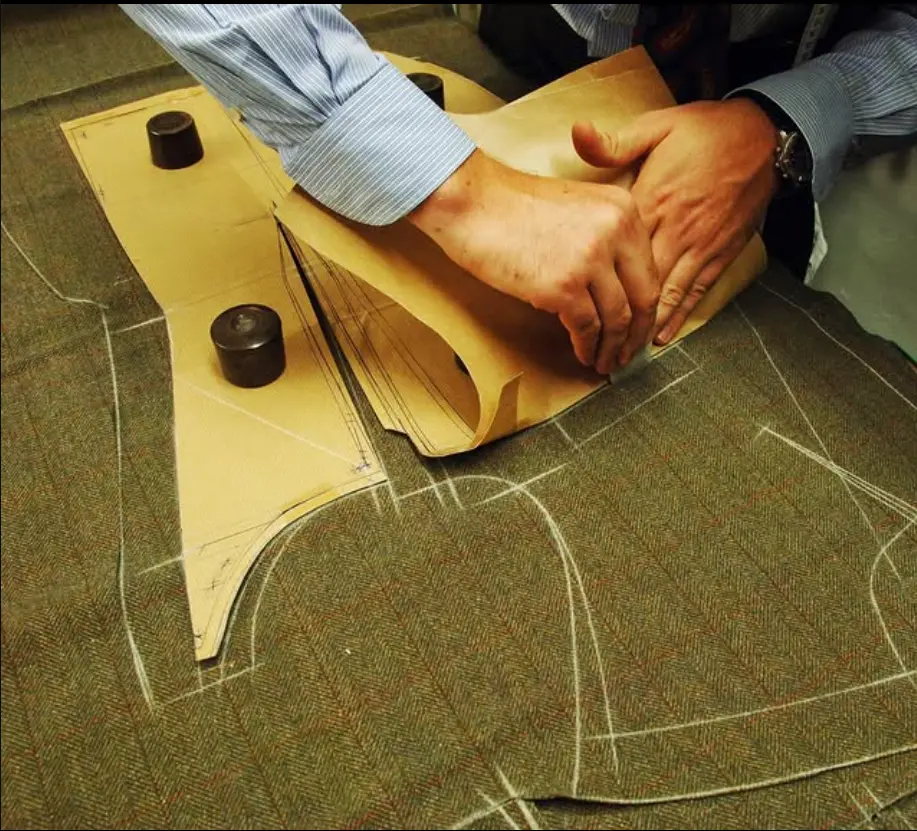
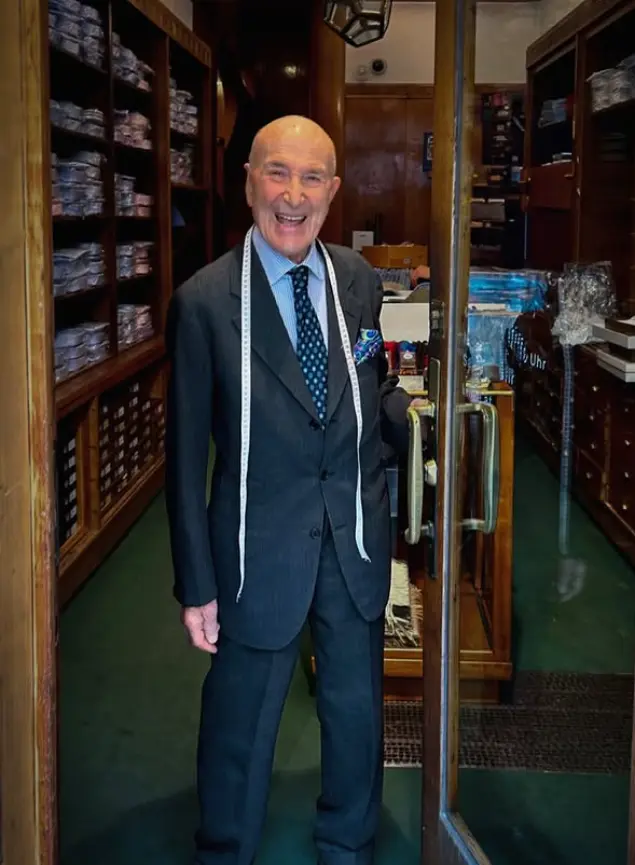
At Knize, the core of the craft lies in tailoring, fit, and the knowledge of occasion. In the Meisterwerkstatt at Graben, pieces are still made and serviced by hand. Cloth, cut, proportion, finish, and the quiet discipline of a well-fitted garment all form part of the house’s understanding of dress.This is especially visible in Frack-Maßschneiderei. The art of tailcoat tailoring, listed in Austria’s national register of intangible cultural heritage, is still carried out at Knize in traditional handwork. Evening dress is not treated as costume, but as a precise code: one that depends on cut, posture, proportion, and knowing how to dress correctly for a given occasion.
4. Enduring Legacy & Resilience
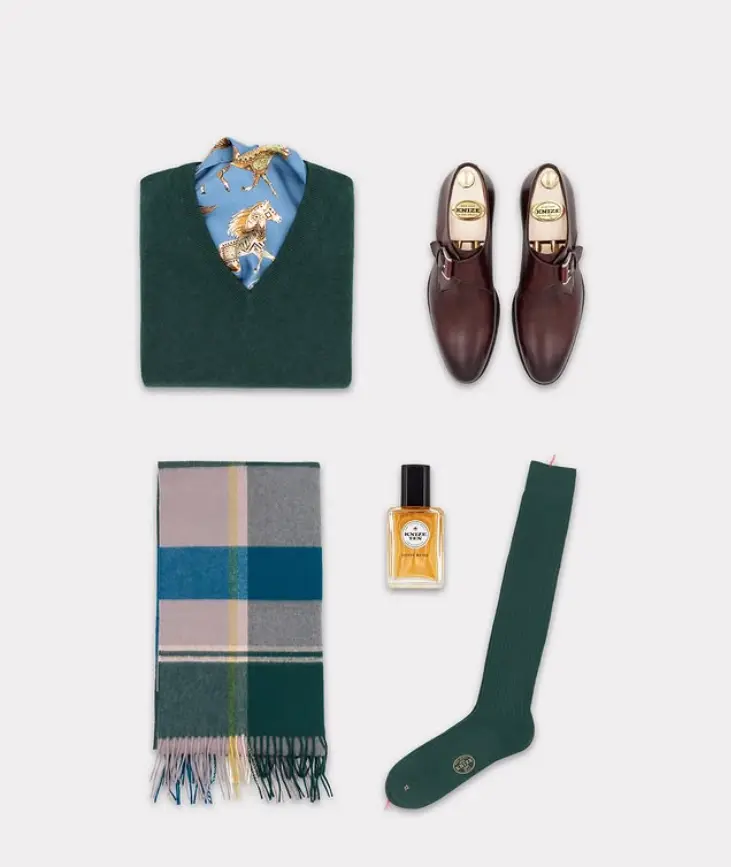
Knize’s resilience lies in the rare combination of style, service, and continuity. The company has lived through imperial Vienna, modernist reinvention, exile, war, post-war loss, and changing habits of dress. Through all of this, it has preserved an idea of fashion that is less about trend than about correctness, quality, and the long life of a well-made wardrobe.
The house’s cultural reach can be seen in the names attached to its history. Oskar Kokoschka paid for his suits with paintings; Marilyn Monroe had blouses made by Knize; Kurt Tucholsky ordered shirts; Josephine Baker had ski trousers made; and Marlene Dietrich had tailcoats tailored for her stage shows. These names are more than decorative glamour. They show how widely Knize’s language of dress, grooming, and presence travelled, from Viennese tailoring to literature, painting, cinema, performance, and international modern life.
5. Vision for the Future
Knize’s future lies in keeping the gentleman’s wardrobe relevant without turning it into a museum piece. The company combines Maßsalon and prêt-à-porter, historic interiors and contemporary sales rooms, tailoring and ready-to-wear, formal evening dress and everyday clothing, in-store service and an online shop. Tradition is not presented as performance, but as a working practice.