Staud´s Wien
A Viennese Culture of Preservation
1. Identity & Presence
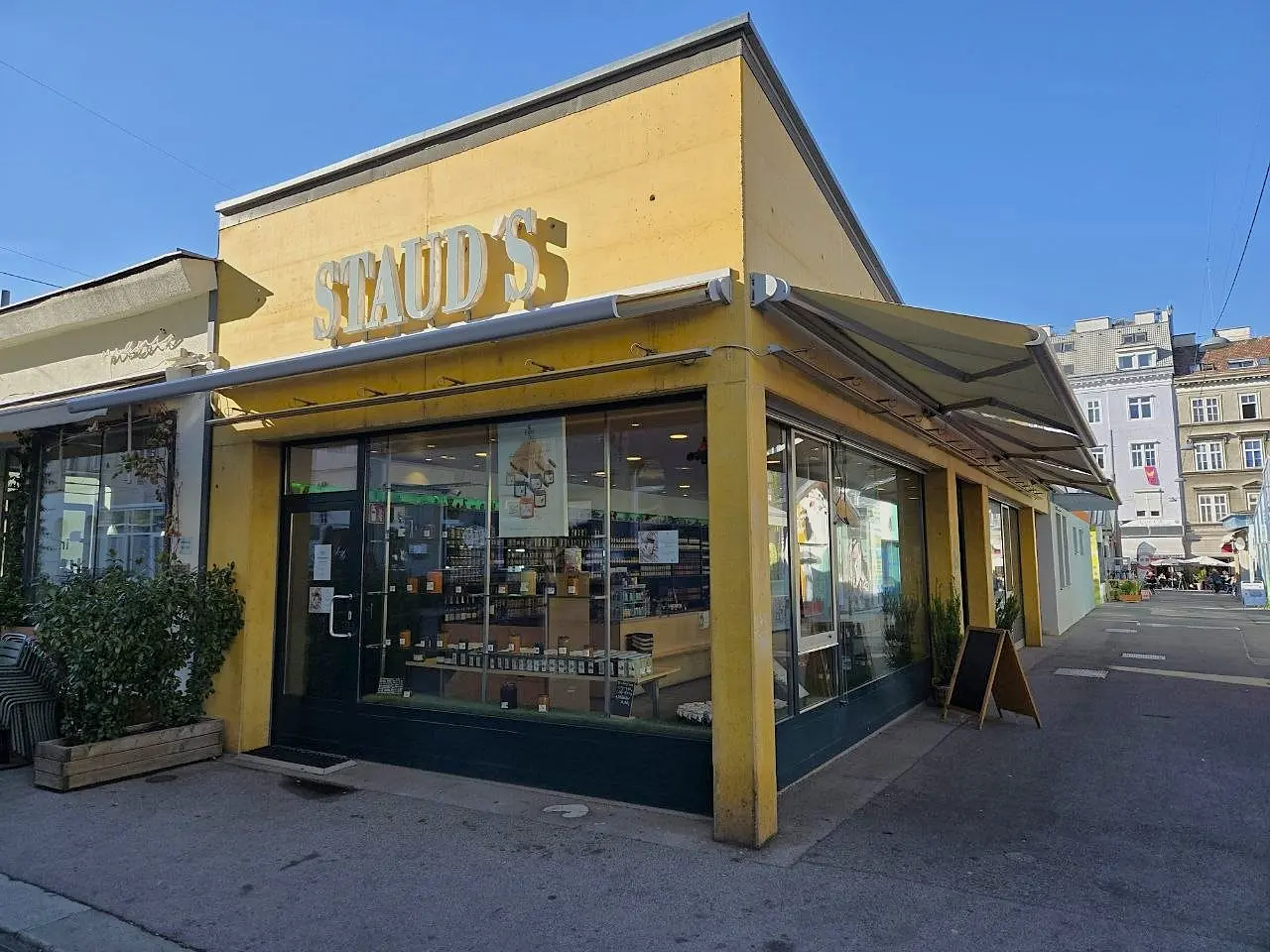
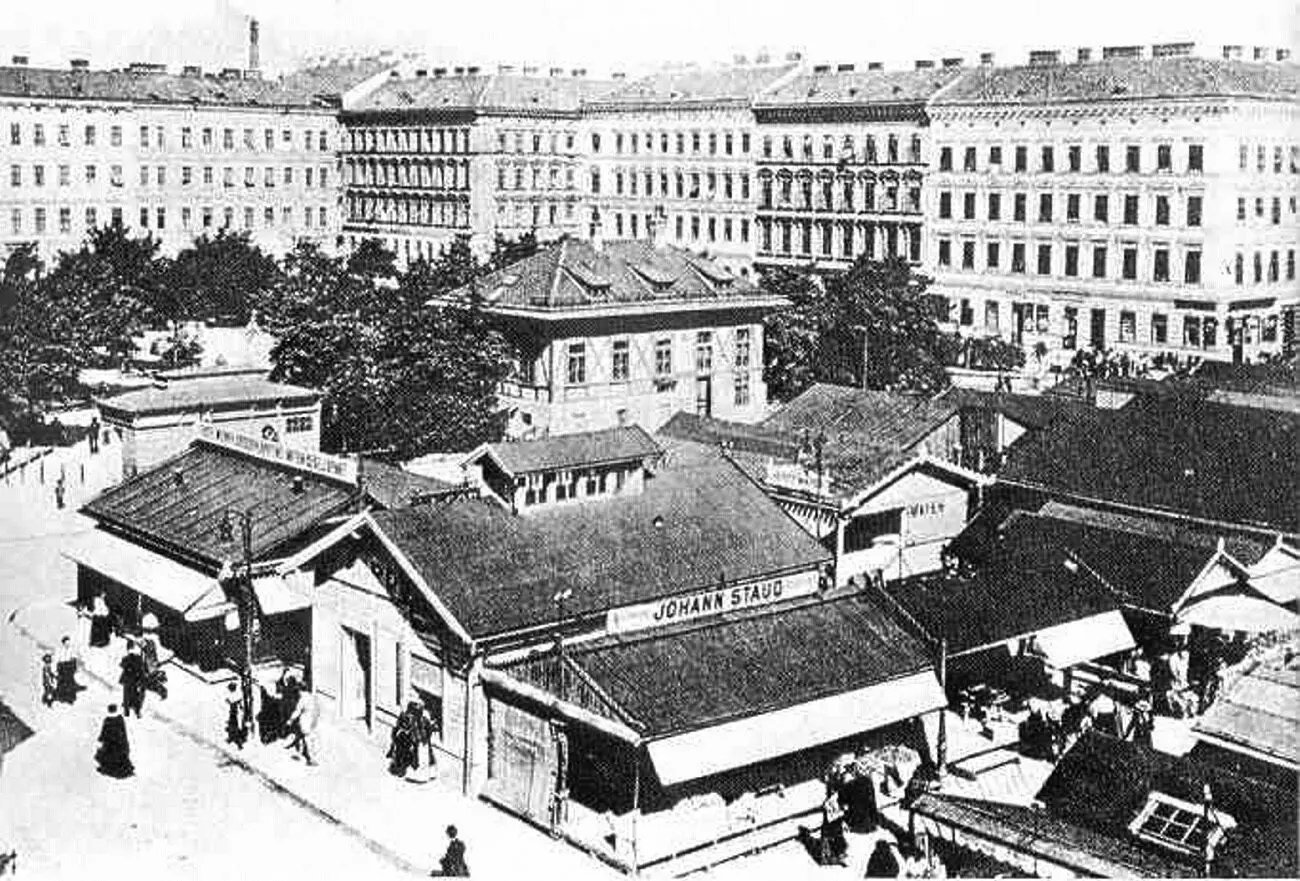
Staud’s is one of Vienna’s most recognisable houses for fine preserves, fruit spreads, compotes, chutneys, and pickled specialities. Its roots reach back to Ottakring’s market culture: in 1883, the Staud family was already trading fruit and vegetables at the Brunnenmarkt. In 1971, Hans Staud turned that inheritance into the present company, devoted to preserving and refining produce in glass.
The company remains based in Vienna, with its production at Hubergasse 3 and the Staud’s Pavillon at Brunnenmarkt 156. The Pavillon connects Staud’s visibly to the market world from which it grew: a place for tasting, talking, buying, returning, and recognising that preservation begins long before the jar, with produce, season, origin, and trust.
2. The Origin Story & Key Figures
Staud’s grew out of market knowledge before it became a house of preserves. For generations, the family worked with fruit and vegetables in Ottakring’s market world, where freshness, season, quality, trust, and the daily relationship between trader and customer were not abstract values, but practical necessities. Hans Staud later transformed this inherited understanding into the present company, devoted to preserving and refining produce. What began with apricots and cucumbers developed into a Viennese delicatessen house whose sweet and sour specialities now travel far beyond Austria.
3. The Core of the Craft
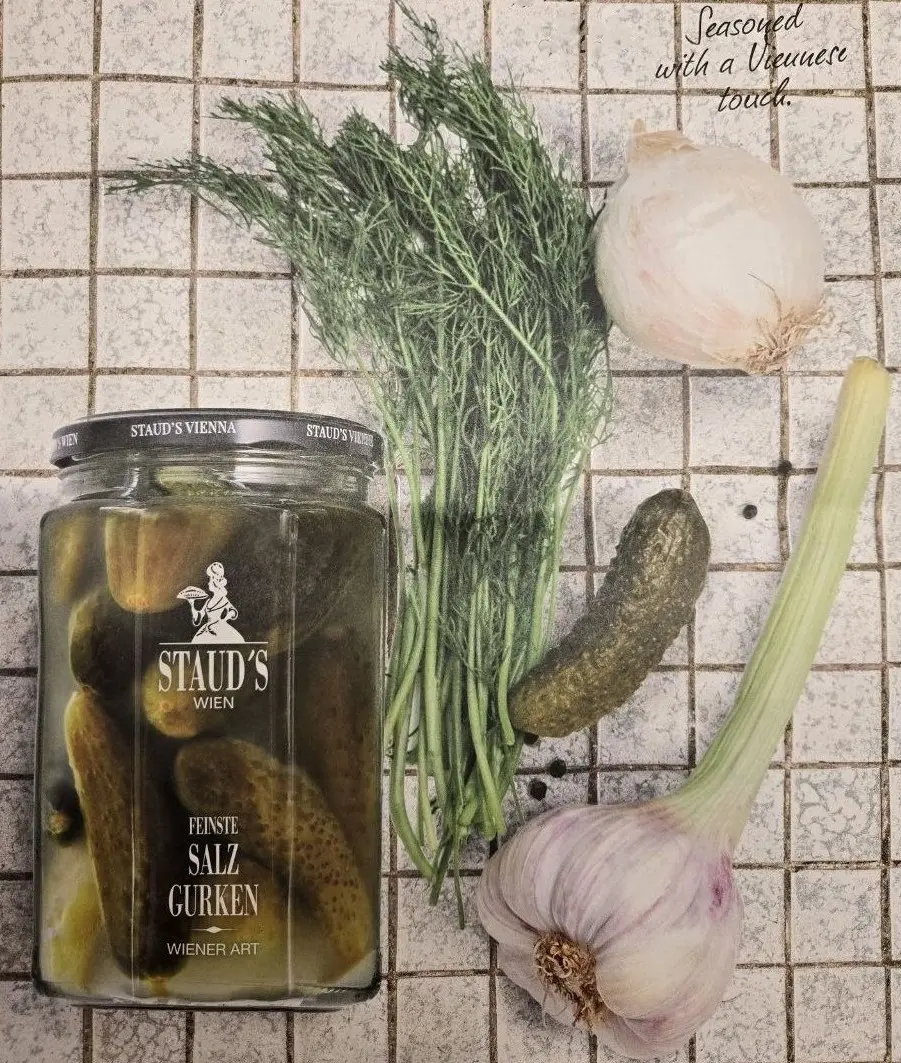
At Staud’s, the core of the craft lies in Veredelung: the careful transformation of fruit and vegetables into something that preserves their character while making them last. This is not preservation as mere storage. It is preservation as taste, texture, colour, balance, and memory. A fruit spread should still know what fruit it came from; a pickled cucumber should still have crunch, clarity, and balance.
The company’s range moves between sweetness and acidity, between apricot and cucumber, between compote, chutney, jam, Röster, and pickled vegetables. That breadth is part of the craft. Staud’s has to understand ripeness, variety, season, sugar, vinegar, spice, and the particular point at which a product becomes stable without becoming dull.
4. Enduring Legacy & Resilience
Staud’s resilience rests on an idea of success that was never only about speed or scale. Hans Staud was less interested in quick growth than in bringing the interests of consumers, suppliers, employees, trade partners, and the environment sustainably under one roof. Quality was the common denominator: the point at which responsibility, taste, and trust could meet.
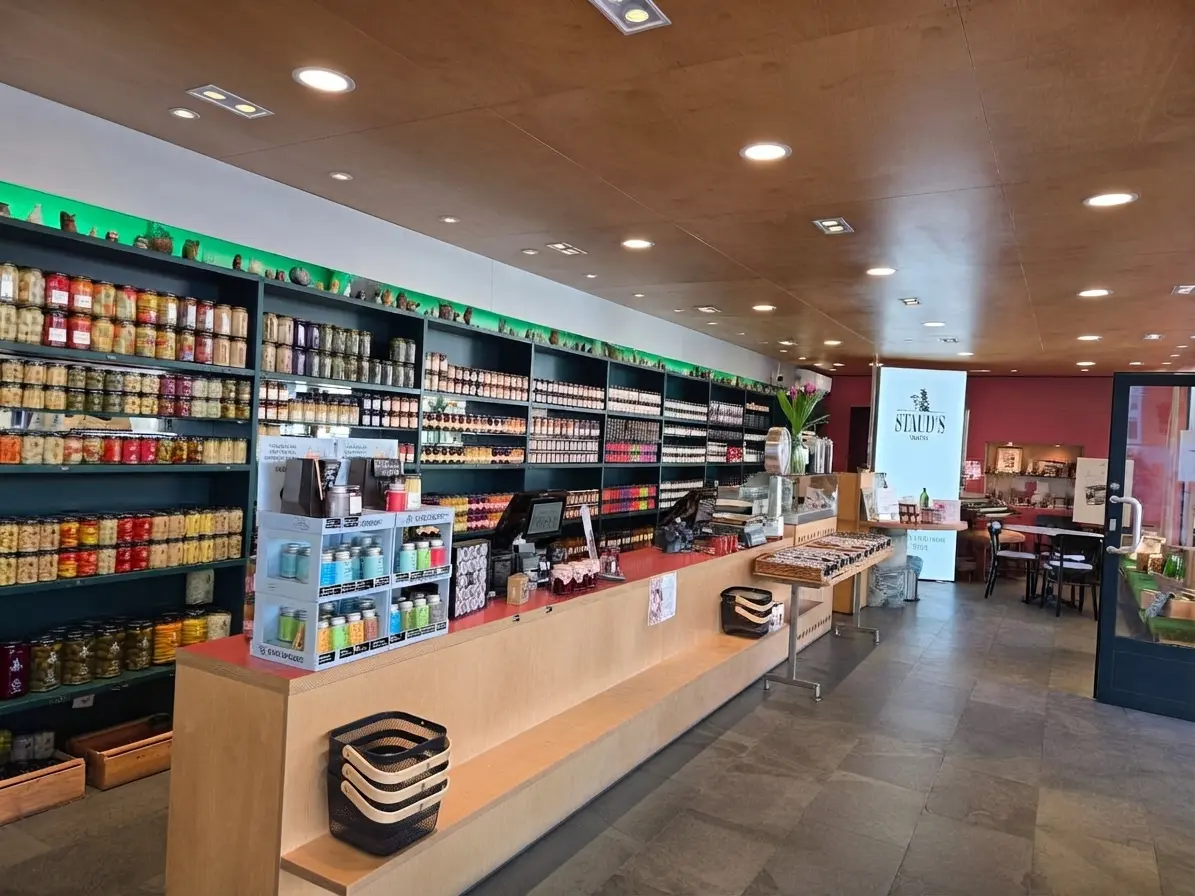
That attitude explains why the company’s connection to the Brunnenmarkt still matters. Staud’s has grown far beyond Ottakring, but the market remains part of its identity: a place of conversation, judgement, freshness, and return. The Pavillon is not simply a shopfront. It carries the atmosphere of the “Standl” into the present, keeping the company close to the people, produce, and everyday rituals from which it came.
This makes Staud’s legacy remarkably personal. Its jars may travel far beyond Austria, but the company’s strength remains rooted in something local and direct: knowing where things come from, knowing when they are good, and preserving them with enough care that the result still feels alive. In the Limited Line, even the labels belong to this culture of attention, written by hand by Hans Staud himself.
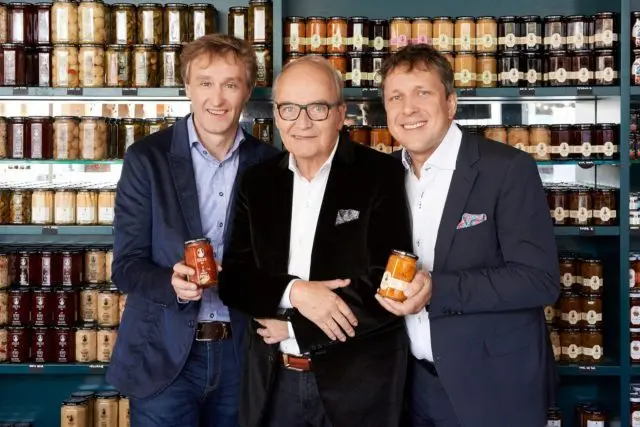
At the Pavillon, that warmth is not abstract. It lives in the organ in the corner, in the line of owls sitting along the top shelves, collected by Oma Staud and sent from near and far, and in the product line that still carries her name.
5. Vision for the Future
Staud’s future lies in carrying the spirit of the market stand into contemporary food culture. The company is already more than a producer of jams and pickles; it connects Viennese roots with international reach, traditional preservation with modern product ideas, and everyday pantry goods with a clear sense of quality, season, and origin.
This also shows in the company’s collaborations, special editions, and cultural projects. Staud’s works with partners across food, design, charity, sport, and music, from limited products and seasonal editions to initiatives such as the Hans Staud Music Prize. A 2025 design installation, created for a Staud’s product presentation, even translated the company’s marmalade-like substance into crafted vessels and table arrangements. Such projects keep the brand moving without weakening its centre. The jar remains the anchor, but what happens around it can change, surprise, and bring new people into contact with the Staud’s world.