Manner
Home of Vienna’s Most Famous Wafer Since 1890
1. Identity & Presence
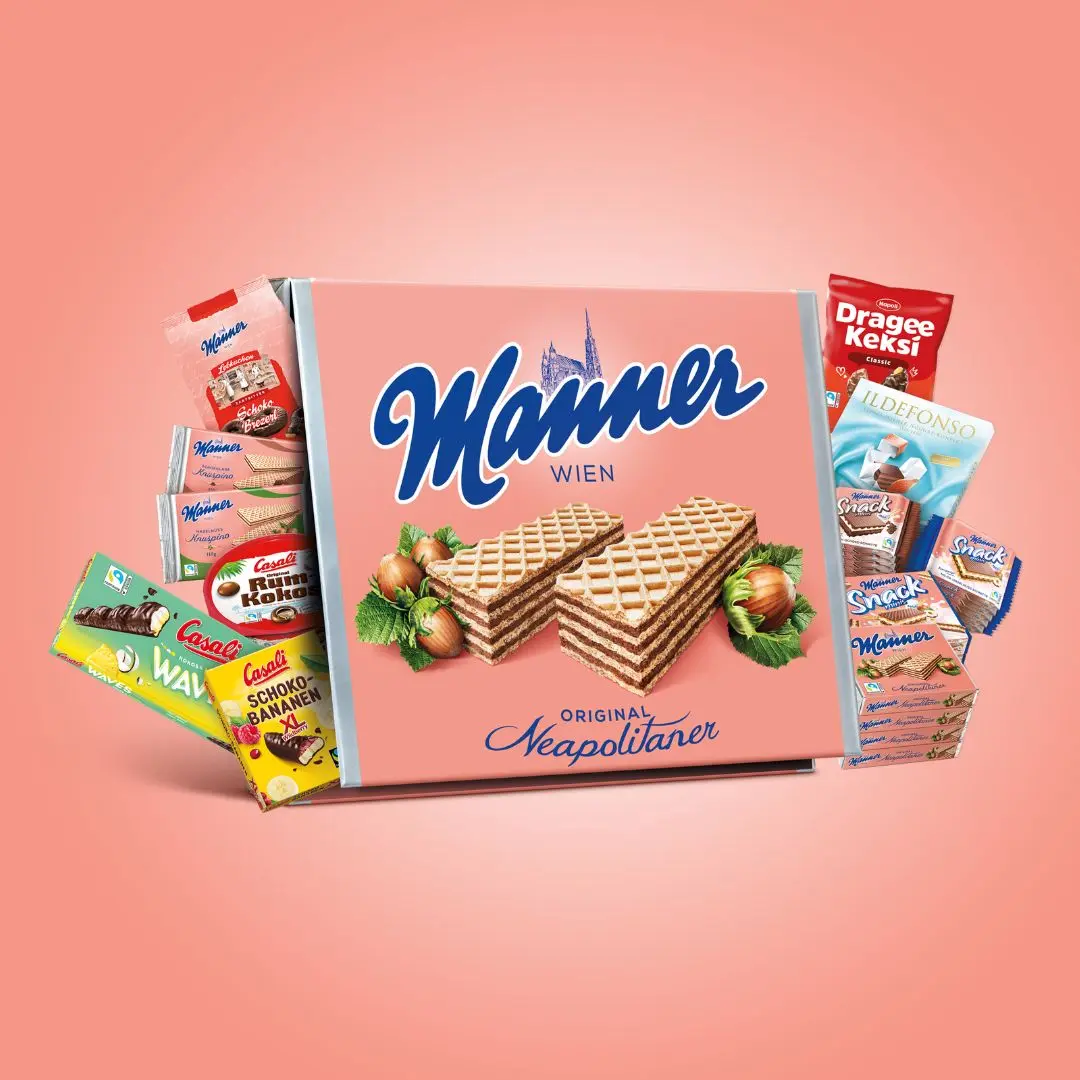
Manner is one of Austria’s most recognisable confectionery companies. Founded in 1890, Josef Manner & Comp AG is today a publicly listed company and, at the same time, a rare example of an Austrian business that has remained largely in family ownership since its beginnings. Its world extends from wafers, dragees, and sugar foam confectionary to a wider brand family that includes Manner, Casali, Napoli, Ildefonso, and the Mozartkugel manufacturer Victor Schmidt.
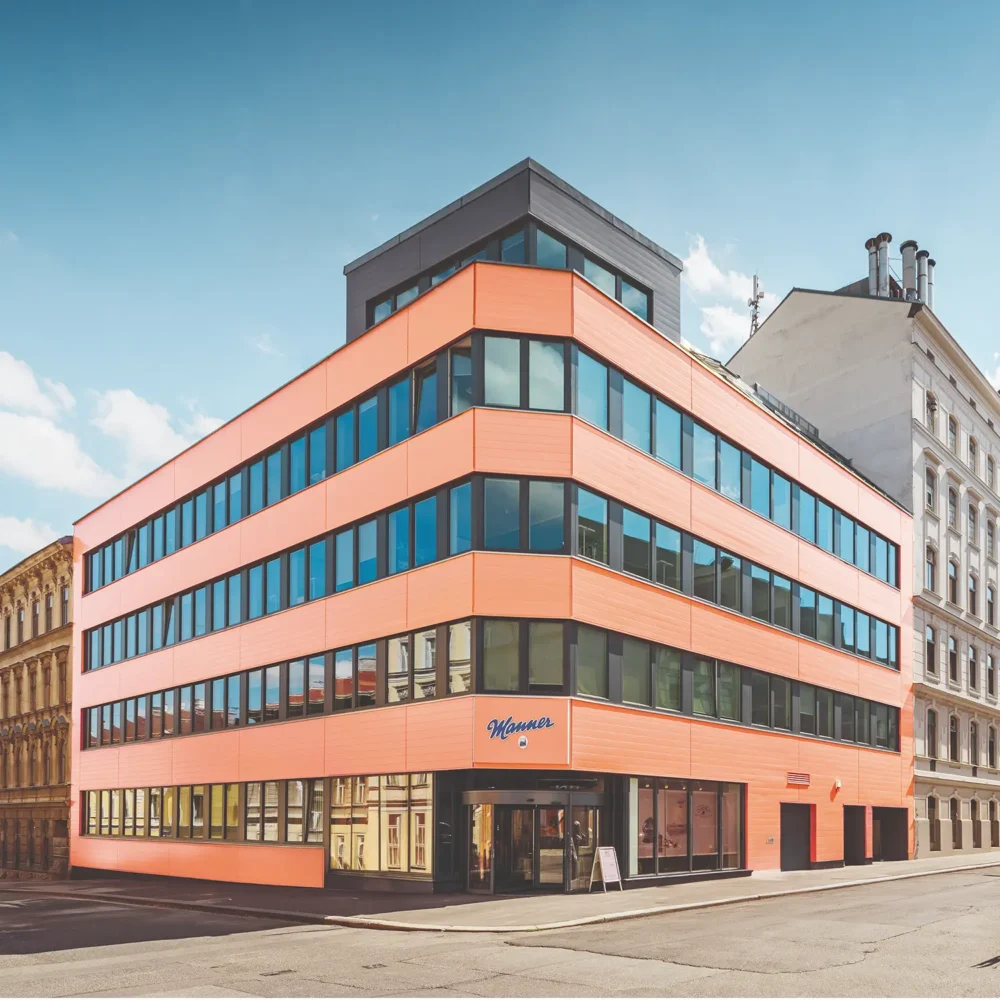
The company’s presence is both local and international. Its headquarters and main production site are located at Wilhelminenstraße 6 in Vienna’s 17th district Hernals, where the Original Neapolitaner Schnitte is produced until this day. A second production site operates in Wolkersdorf in Lower Austria, while a strong network of international partners makes Manner products available in more than 50 countries worldwide.
In Vienna itself, Manner remains highly visible through its dedicated shops, including the much-visited Manner Shop am Stephansplatz, as well as through everyday retail and the company’s online shop. This combination is part of Manner’s particular character: industrial in scale, international in reach, and still strongly tied to the city image from which it first emerged.
2. The Origin Story & Key Figures
In 1889, Josef Manner I opened a small shop for chocolate and fig coffee near Vienna’s Stephansplatz. His ambition was simple and unusually democratic: better quality at fair prices. When the chocolate supplied to him did not meet his expectations, he decided to produce it himself. In 1890, at the age of only 25, he acquired the concession and equipment of a small chocolate maker and became the owner of the Chocoladenfabrik Josef Manner.
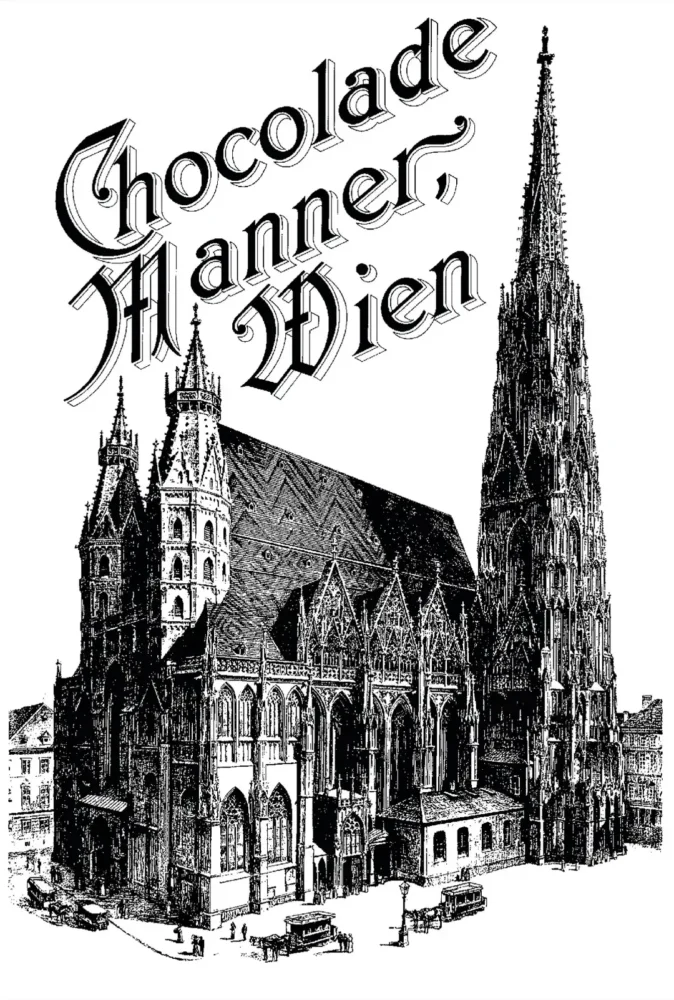
That same year, the Stephansdom was registered as the company’s protective trademark, anchoring the young business visually in the heart of Vienna. Manner soon moved to Hernals, where the company expanded rapidly. By 1897, Josef Manner was already employing around 100 people; in 1913, after the expansion of the factory and the acquisition of modern machinery, Manner became a public limited company. By then, it had grown into one of the leading confectionery producers of the Austro-Hungarian monarchy.
3. The Core of the Craft
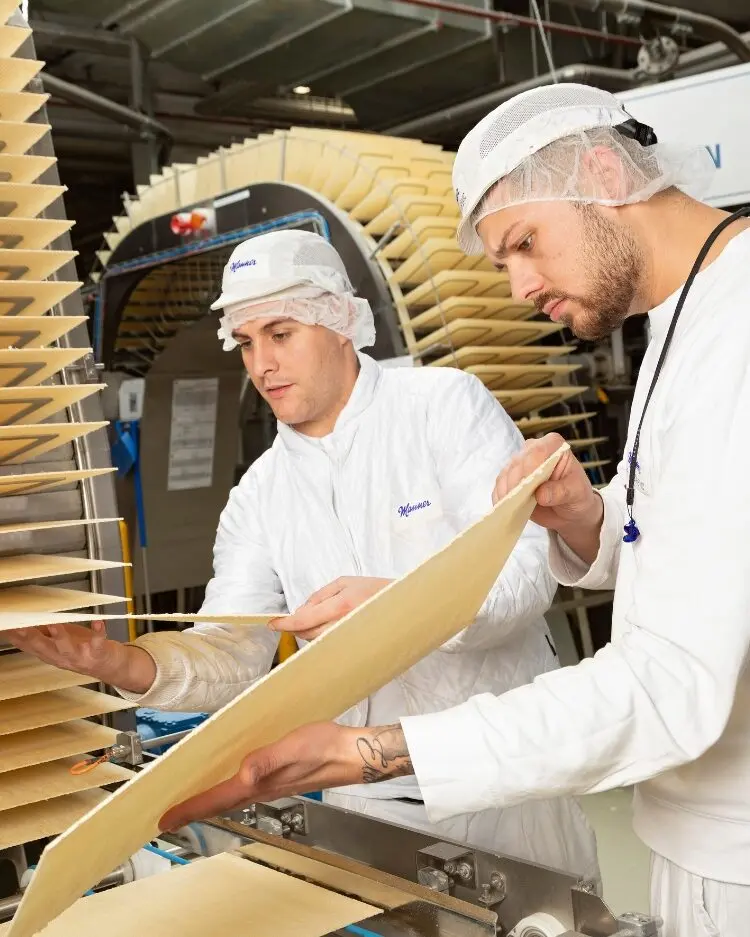
Despite the wide product range, the core of Manner remains, unmistakably, the Original Neapolitaner Schnitte: five layers of delicate wafer, four layers of hazelnut cocoa cream, a compact format designed to be held and shared, and a recipe whose continuity is part of the product’s character. Manner’s craft is not the craft of the single handmade object. It is the craft of consistency: making a familiar taste, texture, and experience return reliably, packet after packet.
Quality begins with ingredients, recipes, and control. Manner emphasises original Austrian recipes, strict quality standards, and responsible value creation. The cocoa used for Manner products comes from fair trade, and the company roasts its valuable cocoa beans in Vienna. For the Mannerschnitte, this matters not only technically, but sensorially: the product is expected to be crisp, nutty, tender, creamy, and unmistakably itself.
4. Enduring Legacy & Resilience
Manner’s resilience lies in the rare combination of everyday availability and strong emotional memory. The Mannerschnitte is not reserved for special occasions. It belongs in handbags, office drawers, school memories, train stations, ski days, supermarket shelves, and small acts of giving. It is ordinary in the best sense of the word: a product so familiar that it becomes part of how people remember places, journeys, breaks, and childhood.
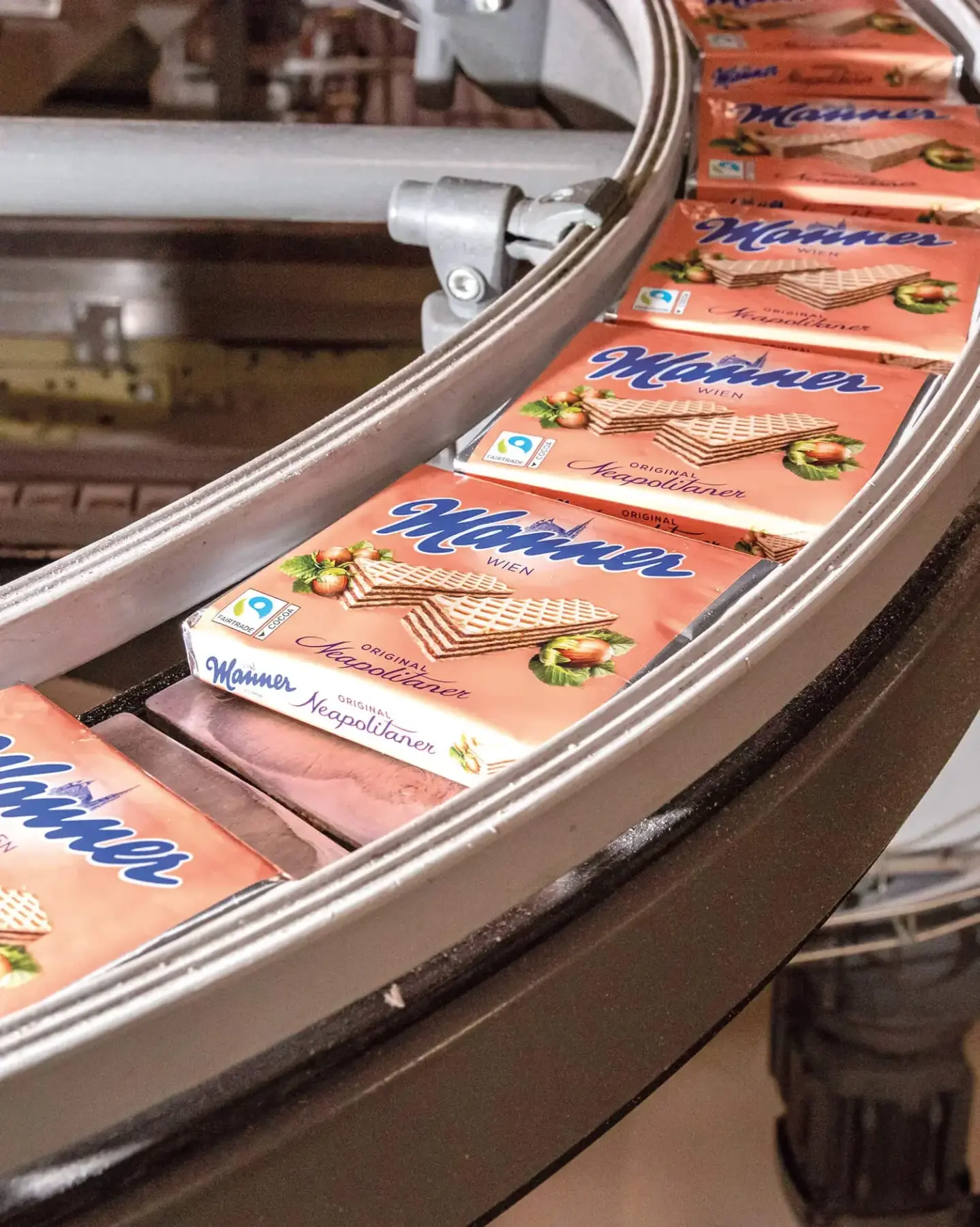
That familiarity has also made Manner a Viennese symbol. The Stephansdom on the package still points back to the company’s origins near Stephansplatz, while the Manner Shop am Stephansplatz turns the brand into a physical part of the city’s centre. According to Manner, up to 4,000 Mannerschnitten are sold there daily. Worldwide, two pocket packs are eaten every second, a figure that shows how far this small Viennese wafer has travelled without losing its local identity.
5. Vision for the Future
The future of Manner is shaped by the practical realities behind a beloved product. Raw material prices, cocoa sourcing, sugar reduction, packaging regulation, export markets, and the cost of producing an affordable confectionery product in Austria all influence the conditions under which the much-beloved Mannerschnitte can remain what people expect it to be. To reduce its dependence on the volatile global hazelnut market, the company has planted its own hazelnut trees in Azerbaijan. After all, hazelnuts are the heart and soul of the Mannerschnitte.
What makes these challenges demanding is that they must be met without weakening the values and quality standards on which the brand depends. This responsibility has a historical dimension. Carl Manner, the last major representative of the founding family in the company’s leadership, died without direct heirs in 2017 and had already helped secure the company’s long-term continuity through a foundation structure. His understanding of responsibility included the fair treatment of resources and employees, a legacy the company now connects with its commitment to Fairtrade cocoa and practical measures such as using waste heat from the Hernals production site for district heating in the surrounding neighbourhood.