KOTTAS
Herbal Knowledge on the Freyung Since 1795
1. Identity & Presence
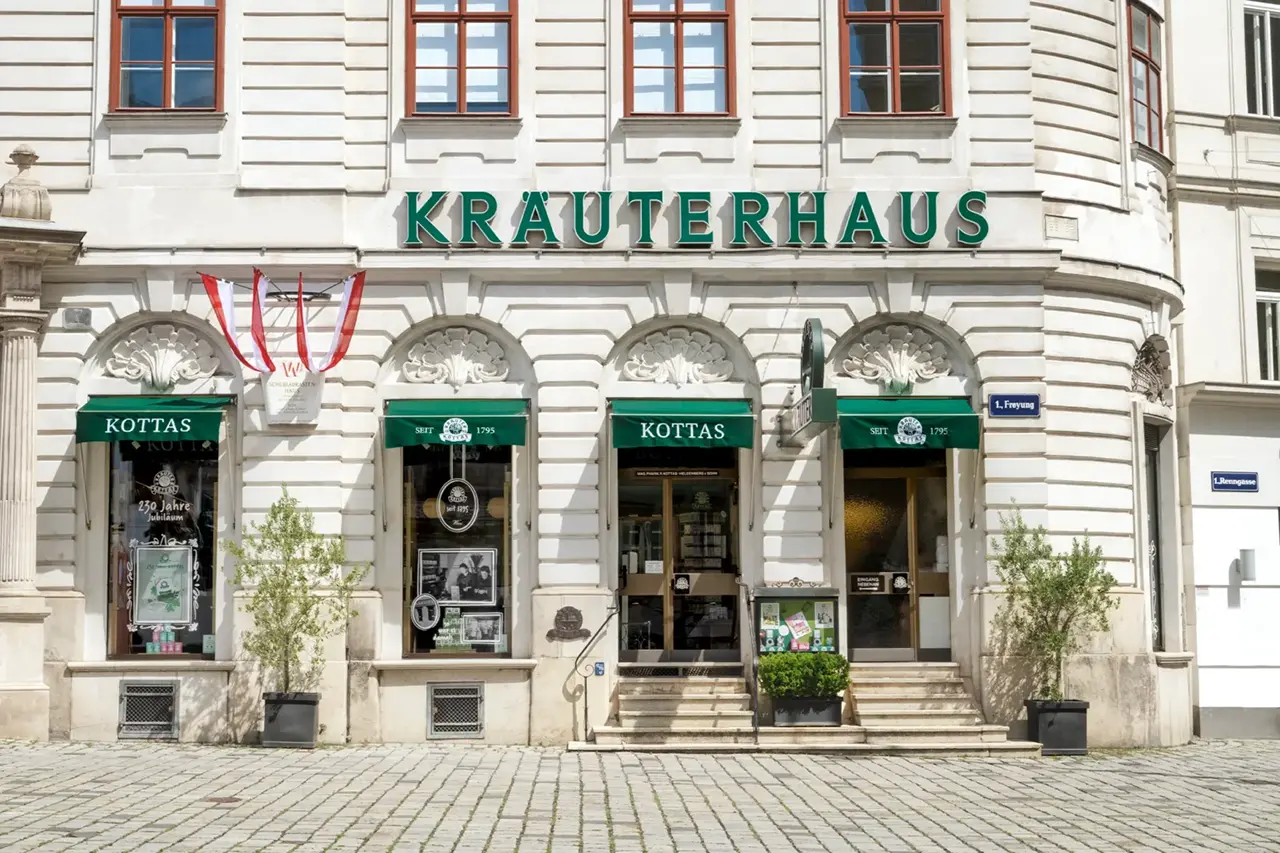
KOTTAS is an Austrian family business based in Vienna and, founded in 1795, the oldest existing pharmaceutical wholesaler of medicinal herbs in Austria. What began as a "Medicinische Kräuter Handlung" on the Freyung has, over nine generations of the Kottas- Heldenberg family, grown into a company that brings together traditional alpine herbal knowledge and the standards of a modern pharmaceutical enterprise. Its historic public face remains the KOTTAS Kräuterhaus at Freyung 7 in Vienna's 1st district, while production, distribution, and quality assurance are based in Vienna's 23rd district at Eitnergasse 8. The company can be reached via www.kottas.at, at +43 1 531 21 0, or via info@kottas.at.
 Company KOTTAS on
Instagram
Company KOTTAS on
Instagram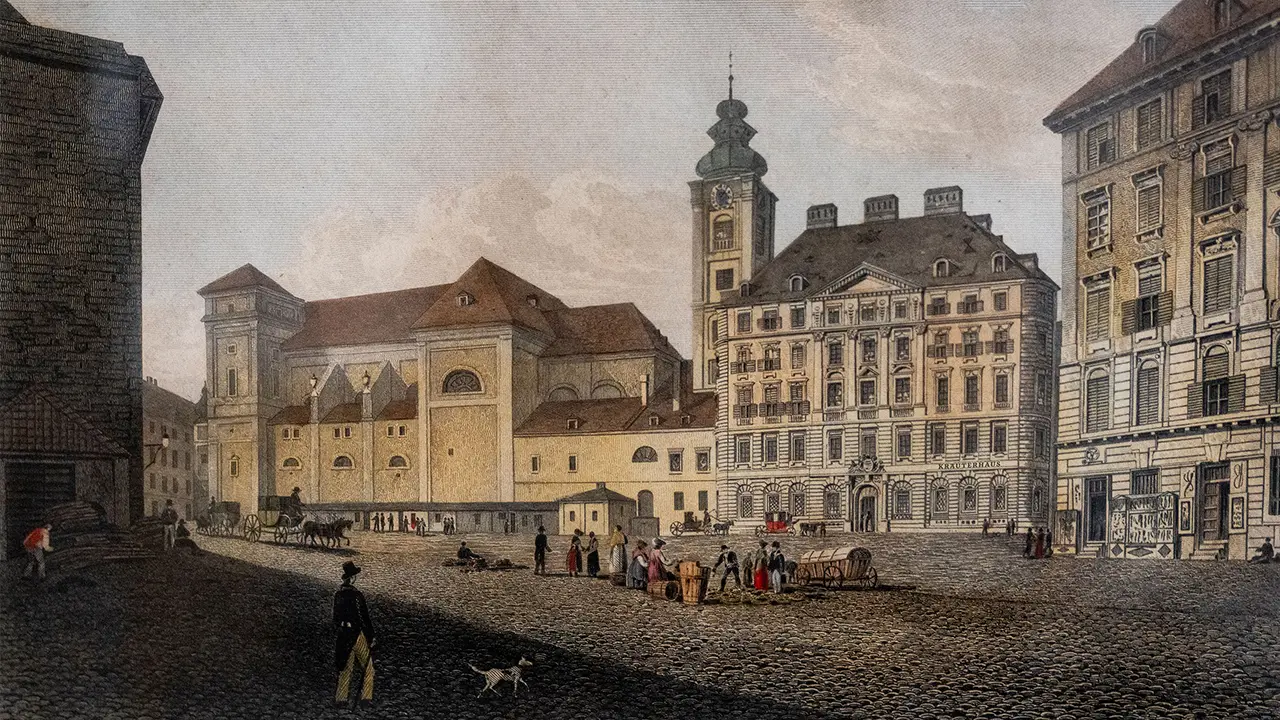
2. The Origin Story & Key Figures
The story of KOTTAS begins on the Freyung in the 18th century, where the Kottas-Heldenberg family was active as one of the so called Dürrkräutler, traders in dried herbs. In 1795, Anton Kottas Heldenberg expanded this activity into a permanent shop and opened the Medicinische Kräuter Handlung in the Prioratshaus of the Schottenstift, also known as the "Schubladkastenhaus". With this step, the foundation was laid for a family enterprise that has remained rooted in the same place ever since. Over the course of the 19th century, the house developed into a respected Viennese address for medicinal herbs, shaped from early on by the ambition to respond to the concrete needs of its time.
That practical relevance became especially visible after the First World War. At a time of severe food shortages and widespread intestinal illness (caused by worms), the family developed a so called Wurmtee, for which demand became so great that customers queued outside the shop. In the years that followed, a number of herbal recipes were further refined, including blends such as Magen Darmtee and Herz Kreislauftee, both of which remain part of the house's living repertoire.
The postwar decades marked a decisive expansion. As medicinal herbs from around the world were difficult to obtain in Austria, the family began sourcing them directly through major port cities and later through tea producing countries such as Sri Lanka, India, and Japan. Out of this phase grew a second pillar beside the retail business: the pharmaceutical wholesale trade in medicinal herbs. In 1965, the first KOTTAS filter bag teas appeared under the name Kräuterexpress. These steps transformed the company from a historic Viennese Kräuterhaus into a business of national standing without severing it from its origin. Since 2000, Dr. Alexander Kottas Heldenberg has continued this development with a clear emphasis on modernization, quality, and the serious application of phytotherapy.
3. The Core of the Craft
What distinguishes KOTTAS is the way it holds together three things that are rarely kept in balance for so long: inherited herbal knowledge, breadth of raw material expertise, and pharmaceutical discipline. The company works with more than 600 herbs in different forms, from cut to granulated to ground, and all KOTTAS herbal products are further processed in Austria. This is not simply a matter of production geography. It reflects a model in which value creation, control, and responsibility remain closely tied to place.
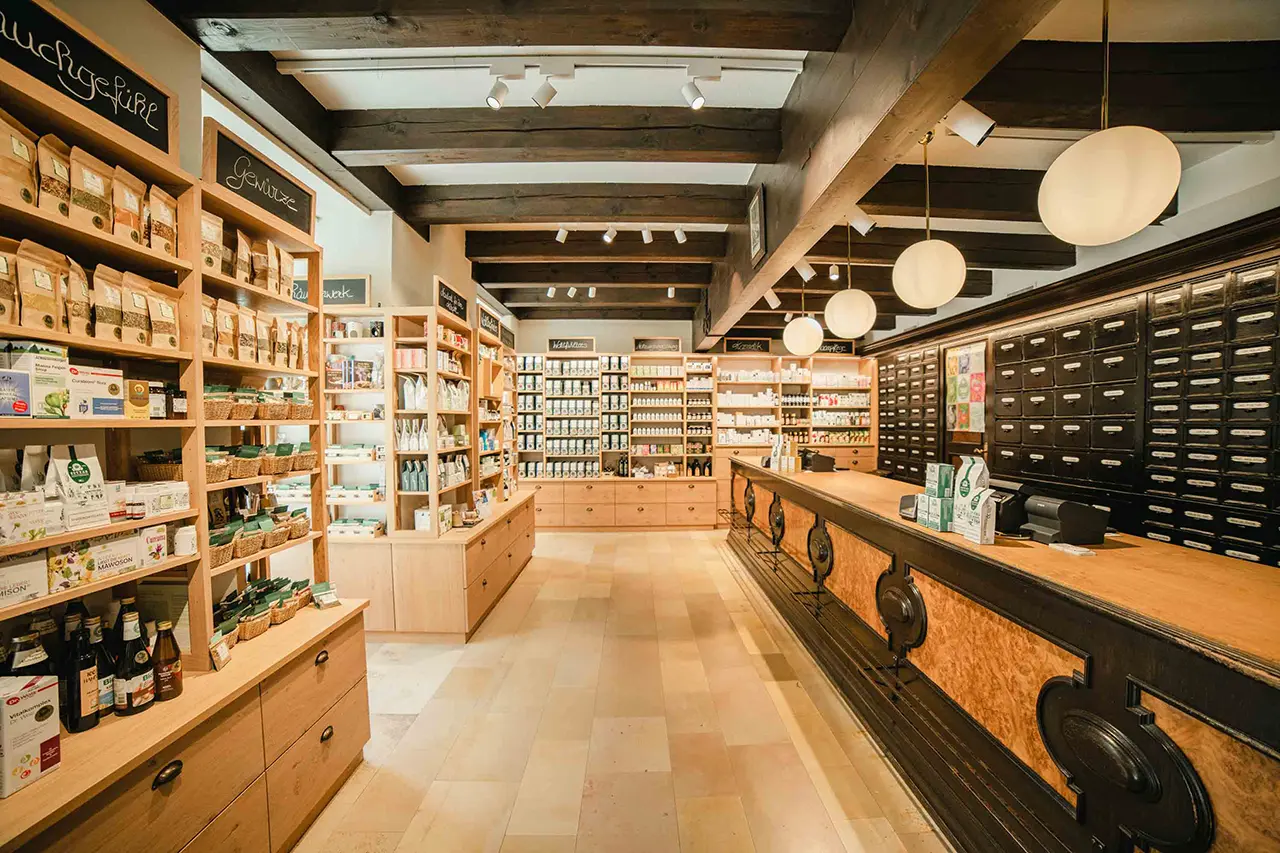
At the Freyung, this competence is still visibly anchored in the atmosphere of the Kräuterhaus itself. The historic shop continues to function not as a decorative remnant, but as a living place of consultation, selection, and continuity. Its assortment reaches far beyond medicinal herbal teas alone and includes loose teas, supplements, bitters, balsams, incense blends, spices, and further natural products. Yet the center of gravity remains unmistakable: expertise in herbs and their use.
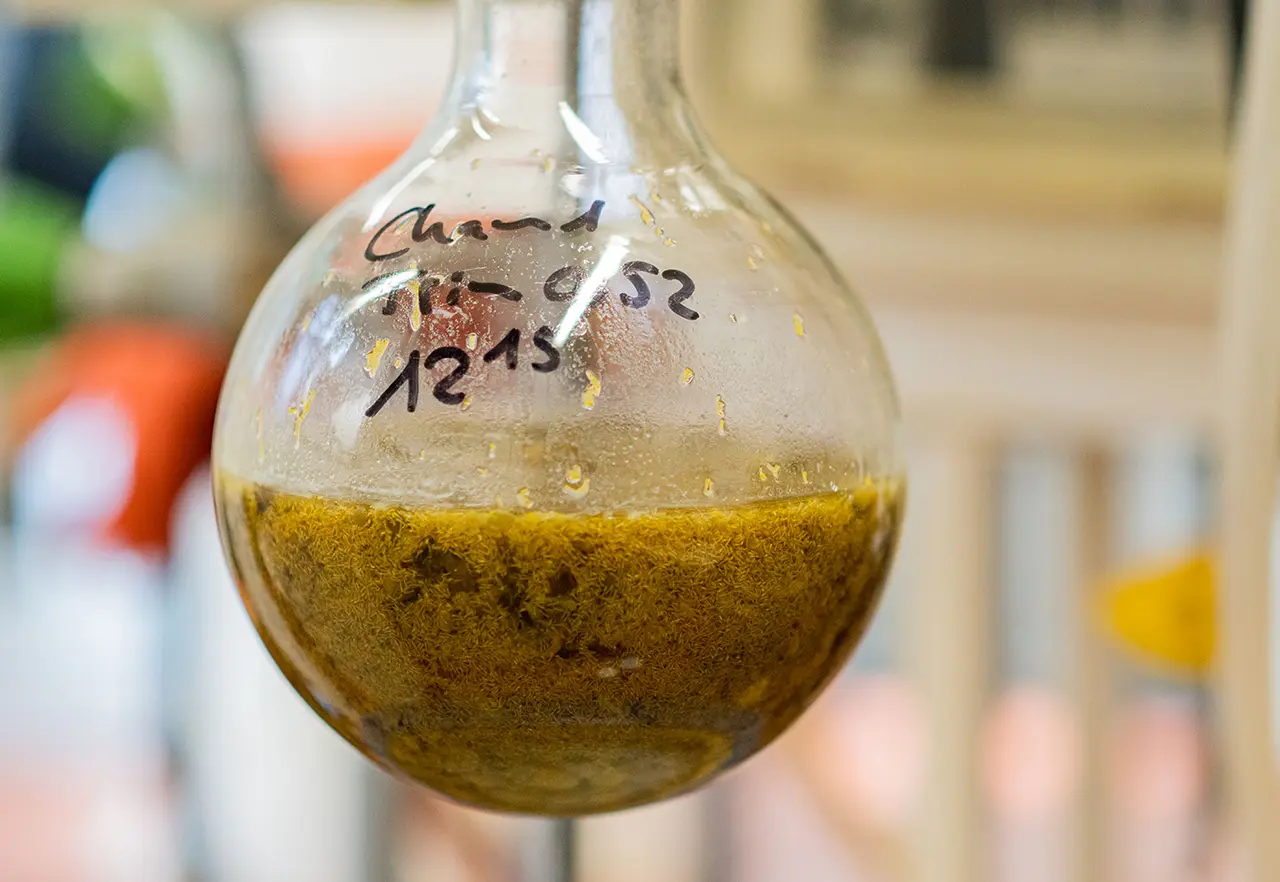
At the same time, KOTTAS insists on standards that place its work firmly in the realm of serious phytotherapy. Every batch is examined for identity, purity, and active ingredient content. For medicinal teas, the requirements of the European Pharmacopoeia apply, and production takes place according to GMP guidelines. KOTTAS is also bio certified, uses FSC certified packaging materials, and emphasizes long-standing sourcing partnerships, including work with herb growers in Upper Austria and a family business in Japan that has supplied its green tea for decades. Today the company offers around 70 filter bag teas, including 25 medicinal teas, and even the filter bags themselves are made from the natural fiber banana hemp.
4. Enduring Legacy & Resilience
KOTTAS has endured because it has never treated herbal knowledge as either mere nostalgia or passing wellness fashion. Across more than two centuries, the company has adapted repeatedly to new conditions without losing its center. It responded to the illnesses of the 19th and early 20th centuries with targeted mixtures, to postwar scarcity with new sourcing routes, to the needs of pharmacies with the expansion of wholesale structures, and to changing habits with filter bag teas, broader product lines, and later digital access. Its resilience lies not in standing still, but in evolving without becoming unrecognizable.
This continuity has also translated into present day relevance. DR. KOTTAS has counted among Austria's top three OTC brands in pharmacies since 2016, and the company describes itself as number one in medicinal teas in the pharmacy channel. More important than the ranking itself, however, is what stands behind it: a house that has preserved the trust of the Kräuterhaus while earning the trust of the pharmacy. The Freyung and the laboratory, the inherited recipe and the documented process, belong to the same structure.
5. Vision for the Future
The future of KOTTAS does not lie in reinvention for its own sake, but in the careful continuation of a proven competence. The company's own language points to a value system that has grown over generations: responsible, resource conscious, attentive, and in harmony with nature. In practice, this means preserving and passing on herbal knowledge, supporting the cultivation of important medicinal plants, maintaining long term sourcing relationships, and continuing to connect traditional herbal wisdom with contemporary phytotherapy and quality assurance.
The launch of the online shop in 2018 shows that this future is meant to be both continuous and accessible. KOTTAS remains rooted in Vienna, but its significance reaches beyond the city. What it represents is not simply a long company history, but a rare form of continuity: an old Viennese competence that has remained usable, credible, and fully alive.